Frequently Asked Questions

Product Information: Carbon Fiber Rods

What are carbon fiber rods and how are they manufactured?

Carbon fiber rods are lightweight, rigid structural components made by pulling continuous carbon fibers mixed with epoxy resin through heated forming dies—a process known as pultrusion. This method aligns fibers axially, resulting in rods with high strength, straightness, tightly controlled cross-sections, smooth surfaces, and virtually limitless length. The process produces rods with a high stiffness-to-weight ratio and exceptional linear strength, as most fibers run along the rod's length on the 0° axis. Note: Pultruded rods are optimized for axial loads and may not perform well under high torque or crushing loads.

What are the main advantages of using carbon fiber rods?

Carbon fiber rods offer high axial strength and stiffness, straight and parallel fiber alignment, tightly controlled dimensions, smooth surfaces, and low weight—often as little as one-third the weight of comparable aluminum rods with similar or better strength. They also have a low coefficient of thermal expansion and are resistant to corrosion and many chemicals. Note: While excellent for tension, compression, and bending, they are not ideal for high torque or crushing loads.

What are common applications for carbon fiber rods?

Carbon fiber rods are widely used in lightweight frame constructions, structural space frames, trusses, remote control (RC) models, drones, and engineered high-performance structures. They are also used as truss rods in stringed musical instruments to reinforce necks and pegheads, and as reinforcement in civil engineering projects such as parking garages, bridges, and highways in corrosive environments. Note: For applications requiring resistance to high torque or crushing, alternative materials may be more suitable.

How do carbon fiber rods compare to aluminum or steel rods?

Carbon fiber rods can weigh as little as one-third of a comparable aluminum rod while offering similar or better strength characteristics. They also provide higher tensile strength than steel and are resistant to chemical corrosion, making them suitable for environments where metal rods may degrade. Note: Carbon fiber rods are not recommended for applications where high torque or crushing loads are present, as metals may perform better in those scenarios.

What are the limitations of carbon fiber rods?

While carbon fiber rods excel in axial tension, compression, and bending, they do not handle high torque or crushing loads well. Their performance is optimal when fibers are aligned with the load direction. For applications involving significant twisting or crushing forces, alternative materials may be required. Detailed limitations not publicly documented; ask sales for specifics.

Features & Capabilities

What are the key performance characteristics of DragonPlate carbon fiber rods?

DragonPlate carbon fiber rods are engineered for high strength-to-weight ratio, durability, and environmental resistance. They are lightweight, corrosion-resistant, and maintain structural integrity in harsh environments. The pultrusion process ensures straight, rigid rods with tightly controlled dimensions. Note: For high torque or crushing loads, consider alternative solutions.

Can DragonPlate carbon fiber rods be customized for specific applications?

Yes, DragonPlate offers customization options including tailored laminate schedules, CNC cutting, and specific ply orientations to meet unique performance and design requirements. Custom fabrication services are available for specialized projects. Note: Customization may increase lead time and cost depending on project complexity.

Are DragonPlate carbon fiber rods compliant with industry standards?

DragonPlate products are manufactured in an ISO 9001:2015-certified facility, ensuring high-quality standards. Materials can be designed to meet stringent industry requirements, such as biocompatibility and radiolucency for medical applications. Note: For specific compliance documentation, contact DragonPlate directly.

Use Cases & Benefits

Who typically uses DragonPlate carbon fiber rods?

DragonPlate carbon fiber rods are used by engineers, designers, product developers, and project managers in industries such as aerospace, robotics, medical devices, defense, industrial automation, and musical instrument manufacturing. They are also popular among hobbyists and RC enthusiasts for lightweight, high-strength frame construction. Note: For applications outside these industries, consult DragonPlate for suitability.

Can you share examples of successful projects using DragonPlate carbon fiber rods?

Yes. DragonPlate carbon fiber rods have been used in marine defense (Frontier Electronic Systems), drone technology (Eureka Dynamics), nuclear and industrial robotics (International Climbing Machines), aerospace student rocket projects, and lightweight guitar designs. These case studies demonstrate the versatility and effectiveness of DragonPlate products across diverse applications. Note: For more details, see the linked case studies on the DragonPlate website.

Working with Carbon Fiber Rods

How do you cut and bond carbon fiber rods?

Carbon fiber rods can be cut using common tools such as a fine-toothed band saw, coping saw, scroll saw, end mill, or Dremel tool. For bonding, epoxy resin is recommended. The rods' epoxy matrix allows for easy bonding with other components. Note: Proper safety measures should be taken when cutting or sanding carbon fiber to avoid inhaling dust.

Are there safety considerations when working with carbon fiber rods?

Yes. When cutting, sanding, or machining carbon fiber rods, it is important to use appropriate safety equipment such as masks and gloves to avoid inhaling dust or skin irritation. CNC cutting services are available to minimize handling risks. Note: Always follow recommended safety guidelines when working with composite materials.

Pricing & Ordering

How is the pricing for DragonPlate carbon fiber rods determined?

Pricing for DragonPlate carbon fiber rods is listed on the website in US Dollars and may change without notice. Additional costs such as shipping, taxes, and handling are calculated based on order details. Customization services may incur extra charges depending on project complexity. Bulk discounts may be available for larger orders. Note: For the most accurate and current pricing, refer to the DragonPlate website or contact sales directly.

Technical Documentation & Support

Where can I find technical documentation and CAD models for DragonPlate carbon fiber rods?

Technical documentation, including the Ultimate Guide to Carbon Fiber Design and Application, downloadable CAD models, and detailed technical specifications, are available on the DragonPlate website. These resources help users integrate carbon fiber rods into their designs and understand their properties. Note: For application-specific documentation, contact DragonPlate support.

How can I get support or request a custom solution for my project?

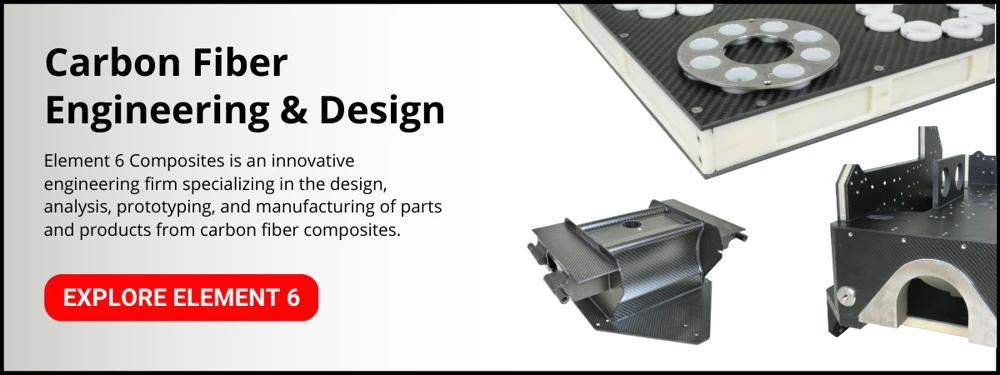
Customers can contact DragonPlate via phone at 315-252-2559 or email at service@dragonplate.com for support or to discuss custom solutions. The Element6 Composites division provides design, prototyping, and manufacturing services for specialized requirements. Note: Response times may vary based on inquiry complexity.

Loading...

An Introduction to Carbon Fiber Rods

Both hobbyists and professionals find carbon fiber rods to be useful building blocks for any number of structures. Because carbon fiber is so rigid, carbon fiber rods are an excellent choice for any application where stiffness and lightness are important. Carbon fiber rods can be as little as ⅓ the weight of a comparable aluminum rod with similar or better strength characteristics.

How Carbon Fiber Rods Are Made

Carbon fiber rods are manufactured by pulling continuous carbon fibers mixed with epoxy resin through heated forming dies, a process known as pultrusion. Pultrusion is similar to the extrusion process used with aluminum and thermoplastic. Through this process, continuous lengths of carbon fiber rods with constant cross-sections can be created, and they take on the shape of the die. As the carbon fibers are pulled through the die and saturated with epoxy resin, the heat from the die begins the resin-hardening, or polymerization, process.

The advantages to using pultrusion to create carbon fiber rods include:

  • High axial strength and stiffness

  • Straight and parallel fiber alignment

  • Tightly controlled cross-section dimensions

  • Smooth surface

  • Limitless length

The extrusion process produces straight, rigid, lightweight rods with a low coefficient of thermal expansion. As with all carbon fiber products, rods have a high stiffness-to-weight ratio. They also boast exceptional linear strength because most of the carbon fibers run along the length of the rod on the 0° axis.

Uses for Carbon Fiber Rods

Carbon fiber rods are an excellent choice for creating lightweight frame constructions. They are therefore often found in structural space frames and trusses. Many remote control (RC) enthusiasts find carbon fiber rods to be the perfect material from which to construct their models. Rods are an excellent material for building engineered and high-performance structures, particularly when combined with carbon fiber laminates. Generally speaking, carbon fiber rods perform particularly well in bending and axial tension or compression applications.

When using rods as structural components in mechanical assemblies, engineers are typically looking for strong, lightweight materials to provide strength and stability. Rods are basic building blocks for many structures, and this product replaces steel and aluminum rods because they are lighter and stronger than either material. Here is a closer look at three common uses for carbon fiber rods.

Carbon Fiber Rods in Frame Construction

Carbon fiber rods possess a high stiffness-to-weight ratio (specific tensile modulus) that makes them the perfect choice for use in lightweight frame constructions. Frames and trusses are often built using carbon fiber rods as the reinforcing material. Carbon fiber components don’t rust and are resistant to many solvents and chemicals. This makes them great for use in industrial framed structures, and other frame-type structures that come into contact with elements or chemicals.

In the stringed instrument industry, luthiers use carbon fiber rods as truss rods to reinforce their instrument necks. This fixes or prevents the neck from twisting or bowing. Carbon fiber rods are also used to reinforce pegheads in instruments like ukuleles and cellos.

Carbon Fiber Rods in Remote Control Projects

Check out any RC message board and carbon fiber will be on it. Remote control hobbyists are particularly fond of carbon fiber rods for the construction of their projects. Whether they are building RC cars, planes, helicopters, drones, or something else, carbon fiber’s lightweight strength routinely is the difference between the project working or not. Here are a few examples:

RC enthusiasts find many uses for carbon fiber rods in all sizes. Drones, in particular, benefit from this strong, lightweight material. The use of carbon fiber can mean the difference between getting off the ground or not, or surviving a crash. With a high Young’s Modulus (ratio of stress/strain) and a density of 1.5 g/cm3, carbon fiber is the perfect material.

Carbon Fiber Rods in Engineering and High-Performance Structures

When combined with carbon fiber laminates, carbon fiber rods are an ideal material for use in building engineered structures. They perform particularly well under bending and tensile or compressive loads, though it is important to understand that carbon fiber rods do not handle high torque or crushing loads well. The carbon fiber characteristics of strength and rigidity make it a particularly useful material in civil engineering applications. Carbon fiber rods can be used to strengthen and reinforce concrete, steel, timber, and masonry.

Engineers working in the construction industry are always trying to adopt improved materials for sustainability. One such application is the carbon fiber reinforced polymer (CFRP) rebar. This type of carbon fiber rod is often used as an alternative to steel reinforcement in concrete structures such as:

  • Parking garages

  • Bridges

  • Highways located in extreme environments

  • Structures that are susceptible to corrosion.

There are a number of reasons that civil engineers are increasingly using carbon fiber. Here are a few:

  • Light weight

  • Higher tensile strength than steel

  • Resistance to chemical corrosion

From hobbyists to professionals, from bicycles to parking garages, carbon fiber rods have an incredible number of uses in today’s world.

Working with Carbon Fiber Rods

Rods are relatively easy to work with. As with any building project, having the right tools on hand makes the job that much safer and simpler. However, there are many tools that can be used to work with carbon fiber rods. A good quality fine-toothed band saw, coping saw, scroll saw, end mill, or Dremel tool will make quick work of cutting carbon fiber rods to the exact length needed for your project. Since they are pultruded in an epoxy matrix, they can be easily bonded together easily using epoxy resin.

Due to their rigidity, light weight, and strength, carbon fiber rods are often used to frame projects when stiffness and weight count. The extrusion process used to manufacture carbon fiber rods offers significant advantages for applications where precision counts. The pultrusion process offers the ability to create custom, smooth rods that can be cut to any length. The tools needed to cut and bond carbon fiber rods are readily available in the garages of most enthusiasts and handymen. It is no wonder, then, that carbon fiber rods are often the preferred choice for both hobbyists and professionals alike.
Explore Element 6

For a full list of rods for purchase, see our Carbon Fiber Rods category.
 

Play Video
Loading...