Frequently Asked Questions
Carbon Fiber Modulus Types & Technical Details
What is modulus of elasticity and why is it important for carbon fiber products?
Modulus of elasticity, also known as Young's Modulus, measures the stiffness of a material and is defined as the ratio of stress to strain in the elastic region. For carbon fiber, a higher modulus means greater stiffness and less deformation under load. Engineers use modulus values (expressed in msi or Gigapascals) to predict and design for structural performance in tubes, plates, and other composite parts. Note: Stiffness is not the same as strength; higher modulus often comes with reduced tensile strength. Source.
What are the differences between standard, intermediate, high, and ultra high modulus carbon fiber?
Standard modulus carbon fibers (33-36 msi, tensile strength 500-700 ksi) are the most common and cost-effective. Intermediate modulus fibers (43-47 msi, tensile strength 800-1000 ksi) offer higher stiffness and strength. High modulus fibers (around 57 msi, tensile strength 640 ksi) are much stiffer but less strong. Ultra high modulus fibers (110 msi, tensile strength 425 ksi) are extremely stiff but have the lowest tensile strength. Engineers select the appropriate modulus to balance stiffness, strength, and cost for their application. Note: Ultra high modulus fibers are not suitable for applications requiring high tensile strength. Source.
Which DragonPlate products are available in high and ultra high modulus carbon fiber?
DragonPlate offers high modulus and ultra high modulus carbon fiber in solid sheets, sandwich sheets, and tubes. Specific product links include High Modulus Solid Carbon Fiber Sheets, Ultra-High Modulus Solid Carbon Fiber Sheets, High Modulus Carbon Fiber Sandwich Sheets, Ultra-High Modulus Carbon Fiber Sandwich Sheets, High Modulus Carbon Fiber Tubes, and Ultra-High Modulus Carbon Fiber Tubes. Note: Availability may vary by product type and dimensions; check product pages for details.
Product Features & Capabilities
What are the key performance benefits of DragonPlate carbon fiber composites?
DragonPlate carbon fiber composites deliver a high strength-to-weight ratio, durability, and resistance to corrosion and environmental factors. Advanced engineering tools like Finite Element Analysis (FEA) are used to optimize designs and reduce material waste. Customizable solutions, including tailored laminate schedules and CNC cutting, ensure products meet specific performance requirements. Materials are designed to meet industry standards such as biocompatibility and radiolucency for medical applications. Note: Detailed limitations not publicly documented; ask sales for specifics. Source.
Does DragonPlate offer custom fabrication and engineering services?
Yes, DragonPlate provides custom design, engineering, and prototyping services through its Element6 Composites division. Services include tailored laminate schedules, CNC cutting, and custom part fabrication. The ISO 9001:2015-certified facility supports full manufacturing from prototypes to high-volume production. Note: Custom projects may require additional lead time depending on complexity. Source.
What technical documentation and resources are available for DragonPlate products?
DragonPlate offers a comprehensive guide to carbon fiber design and application, downloadable CAD models, detailed technical specifications, and practical application resources. These materials help customers integrate products into their designs and understand performance characteristics. Access resources at The Ultimate Guide, CAD Models, and Technical Specs. Note: Some resources may require registration or direct inquiry.
Pricing & Payment Terms
How is DragonPlate pricing determined and what are the payment terms?
DragonPlate product prices are listed in US Dollars and are subject to change without notice. Shipping, freight, taxes, and handling charges are additional and calculated based on weight, dimensions, and shipping method. Customization options may incur extra charges. Payment is typically prepaid via credit card, check, or wire transfer; approved buyers may receive Net 30 terms, with a 1.5% monthly service charge for unpaid balances. Bulk discounts may be available for larger orders. For details, see Terms and Conditions. Note: Pricing does not include shipping or taxes.
Use Cases & Industries Served
Which industries and applications are DragonPlate carbon fiber products used in?
DragonPlate products are used in aerospace, robotics and automation, medical devices, defense, industrial equipment, marine defense, drone technology, nuclear and industrial robotics, and the music industry. Case studies include collaborations with Frontier Electronic Systems (marine defense), Eureka Dynamics (drone test beds), International Climbing Machines (robotic chassis), aerospace student organizations (carbon fiber rockets), and lightweight guitar designs. Note: Not all product types are suitable for every industry; consult technical documentation for application fit. Source.
Who is the target audience for DragonPlate products?
DragonPlate targets engineers, designers, product developers, and project managers in industries requiring high-performance carbon fiber composites. Key sectors include aerospace, robotics, medical devices, defense, and industrial equipment. Products are tailored for professionals seeking lightweight, durable, and customizable solutions. Note: Some products may require specialized knowledge for integration; technical support is available. Source.
Pain Points & Business Impact
What common challenges do DragonPlate products help solve?
DragonPlate addresses high manufacturing costs, complex fabrication processes, localized stress concentrations, regulatory compliance, weight and performance optimization, prototyping and design validation, and material handling safety. Solutions include FEA-driven design, end-to-end services, biocompatible and radiolucent materials, and CNC cutting. Note: For highly specialized applications, additional engineering may be required. Source.
What business impact can customers expect from using DragonPlate products?
Customers can expect reduced manufacturing costs, lower rework rates, enhanced product performance (weight reduction, durability), accelerated time-to-market, simplified regulatory compliance, and risk reduction through validated designs and ISO 9001:2015-certified quality. Note: Impact varies by project scope and industry; consult sales for tailored ROI estimates. Source.
Implementation & Support
How easy is it to start using DragonPlate products and what support is available?
DragonPlate offers prefabricated components that can be cut, drilled, and bonded without specialized equipment, enabling quick integration. Comprehensive guides, CAD models, and responsive customer support are available. Custom solutions may require additional lead time. Customers can contact support at 315-252-2559 or service@dragonplate.com. Note: Custom projects may require detailed consultation. Manage your account.
Customer Proof & Success Stories
Can you share specific case studies or success stories of DragonPlate customers?
DragonPlate has collaborated with Frontier Electronic Systems (marine defense electrical enclosures), Eureka Dynamics (drone test beds), International Climbing Machines (robotic chassis for nuclear/industrial environments), aerospace student organizations (carbon fiber rockets reaching over 10,000 feet), and the music industry (lightweight guitar designs). Each case demonstrates tailored solutions and measurable performance improvements. Note: Results are project-specific; not all products are suitable for every use case. Read more.
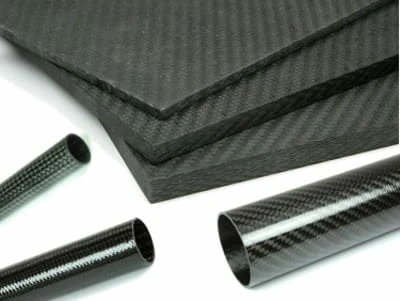 Most carbon fiber is made from an industrial fiber called polyacrylonitrile fiber. The raw fiber is drawn and heated to high temperatures in an anaerobic environment to achieve its remarkable properties. In this quick article, we are going to cover the differences between standard modulus, intermediate modulus, high modulus, and ultra high modulus.