Frequently Asked Questions

Product Features & Capabilities

Why is carbon fiber used in metrology and scientific equipment?

Carbon fiber is favored in metrology and scientific equipment due to its high dimensional stability and low thermal expansion. Unlike metals, carbon fiber components remain virtually unchanged over a wide temperature range, minimizing measurement errors caused by thermal expansion or contraction. Standard carbon fiber parts can achieve a coefficient of thermal expansion (CTE) as low as 1.5 x 10⁻⁶ /K, similar to Invar steel, making them ideal for precision measurement tools and scientific structures. Note: For applications requiring even lower CTE, custom laminate designs are necessary, which may increase complexity and lead time.

What is the coefficient of thermal expansion (CTE) of DragonPlate carbon fiber parts?

Standard DragonPlate carbon fiber parts can be manufactured with a CTE of 1.5 x 10⁻⁶ /K, which is approximately the same as Invar steel. For specialized applications, customized carbon fiber components can achieve even lower CTE values down to 5 x 10⁻⁷ /K by aligning high modulus uni-directional prepregs. Note: Achieving ultra-low CTE in one direction may increase CTE in the orthogonal direction; consult engineering for trade-offs.

How does DragonPlate carbon fiber perform in high-temperature environments?

DragonPlate offers high-temperature carbon fiber products that can withstand continuous exposure to temperatures up to 500°F (260°C). These materials can also survive direct exposure to a propane torch for 30 to 60 seconds with only a minor reduction in stiffness. Note: For applications exceeding these conditions, performance may degrade; consult technical documentation for specific limits.

What types of carbon fiber products does DragonPlate offer for metrology and scientific equipment?

DragonPlate provides a wide range of carbon fiber products suitable for metrology and scientific equipment, including uni-directional prepreg sheets, roll-wrapped and braided tubes, sandwich sheets, structural components, and custom laminates. These products are designed to meet specific requirements for stability, strength, and low thermal expansion. Note: Not all products are suitable for every application; consult with DragonPlate engineers for optimal selection.

Can DragonPlate provide custom carbon fiber components for scientific applications?

Yes, DragonPlate offers custom fabrication services, including tailored laminate schedules, CNC cutting, and specialized geometries to meet unique scientific and metrology requirements. Custom components can be engineered for specific CTE values, strength, and stiffness. Note: Custom solutions may require additional lead time and engineering consultation. Learn more about custom fabrication.

Use Cases & Applications

What are common applications of DragonPlate carbon fiber in metrology and scientific equipment?

DragonPlate carbon fiber is used in measurement and alignment tools, telescope lens support structures, mounting plates for lasers and mirrors, and support beams for x-ray cyclotron sensors. Its low thermal expansion and high stability make it ideal for applications where precision is critical and temperature fluctuations are a concern. Note: For applications with extreme or multi-axis thermal demands, additional engineering may be required.

Can you provide an example of DragonPlate carbon fiber used in extreme scientific environments?

DragonPlate carbon fiber was selected for a measurement device operating above 120,000 ft in arctic regions due to its strength, light weight, and resilience to low temperatures. This demonstrates its suitability for high-altitude and extreme environment scientific applications. Note: Performance in such environments should be validated for each specific use case.

Technical Documentation & Support

What technical resources are available for integrating DragonPlate carbon fiber into scientific equipment?

DragonPlate provides downloadable CAD models, detailed weights and specifications, surface finishes information, and a comprehensive guide to carbon fiber design and application. These resources support engineers and designers in integrating carbon fiber into metrology and scientific projects. Download CAD models | View specs | Read the guide. Note: Some resources may require registration or direct inquiry for access.

Does DragonPlate offer engineering support for scientific and metrology projects?

Yes, DragonPlate's engineering team provides support for custom designs, material selection, and technical questions related to metrology and scientific equipment. Customers can contact DragonPlate by phone at 315-252-2559 or email at service@dragonplate.com for assistance. Note: Complex or custom projects may require additional consultation and lead time.

Pricing & Ordering

How is pricing determined for DragonPlate carbon fiber products for scientific equipment?

Pricing for DragonPlate products depends on the product type, size, thickness, and any custom features such as finishes or face sheet options. All prices are quoted in US Dollars. Shipping charges are based on package weight and dimensions, and buyers are responsible for applicable taxes unless a valid exemption is provided. Note: Prices and discounts are subject to change without notice; contact DragonPlate for a current quote. See shipping and returns policy.

Quality, Compliance & Certification

Are DragonPlate products certified for quality and regulatory compliance?

All DragonPlate products are manufactured under ISO 9001:2015 quality standards, ensuring consistent quality and reliability. For industries such as medical and defense, DragonPlate offers biocompatible and radiolucent materials that meet stringent regulatory requirements. Note: Detailed limitations not publicly documented; ask sales for specifics regarding compliance for your application. View ISO certificate.

Limitations & Considerations

What are the limitations of using carbon fiber in metrology and scientific equipment?

While carbon fiber offers low thermal expansion and high stability, achieving ultra-low CTE in one direction may increase CTE in the orthogonal direction. Additionally, custom laminates and geometries may require longer lead times and higher costs. Not all carbon fiber products are suitable for every scientific application; engineering consultation is recommended to ensure optimal performance. Note: Detailed limitations not publicly documented; contact DragonPlate for application-specific guidance.

Loading...

Metrology and Scientific Equipment

Carbon fiber is rapidly becoming one of the choice materials in the field of metrology due to its high stability and low thermal expansion. In applications where thermal changes will move comparable metal measurement and alignment tools out of tolerance due to expansion or contraction of the material, carbon fiber will remain virtually unchanged over a wide temperature range. A standard carbon fiber part can readily be made with a CTE of 1.5 x 10⁻⁶ /K, or approximately the same as Invar steel, making it an ideal candidate for both metrology tools, as well as scientific equipment (for example, telescope lens support structure or mounting plates for lasers and mirrors).
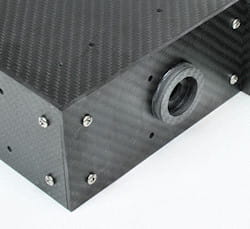
carbon fiber scientific equipment Customized carbon fiber components can be designed with even lower CTE values down to 5 x 10⁻⁷ /K by preferentially aligning high modulus uni-directional prepregs, thus creating a part that has tailored, albeit varying, CTE values along different axes. One example of this is support beams for x-ray cyclotron sensors and equipment, where the majority of the carbon fibers are aligned along a single axis with the goal of reducing the CTE in one direction as much as possible. Although the CTE in the orthogonal direction becomes higher (i.e. it is sacrificed to a certain degree), in these applications it is often necessary to bring the vertical CTE component as close to zero as possible to prevent signal noise due to temperature fluctuations.
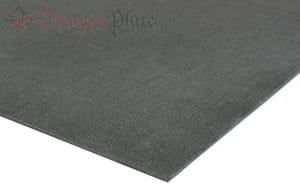
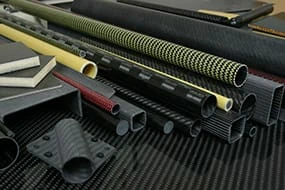
metrology carbon fiber applicationDragonplate off-the-shelf materials, such as uni-directional prepreg sheets, roll-wrapped and braided tubes, and other structural shapes can help you meet your metrology and low CTE design needs. If your application demands a custom laminate or modified geometry, contact us either by phone or email. The engineers at Dragonplate are here to help.

If your equipment will experience excessive temperatures, DragonPlate offers high temperature carbon fiber that can withstand 500F degree temperatures for extended periods of time. Additionally, this material can survive extreme temperatures, such as the direct exposure to a propane torch for 30 to 60 seconds with only a minor reduction in stiffness.
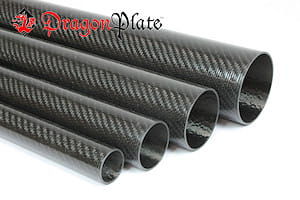
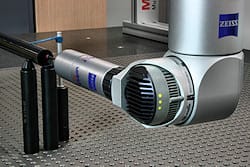
carbon fiber tubescarbon fiber scientific equipment for arctic regions

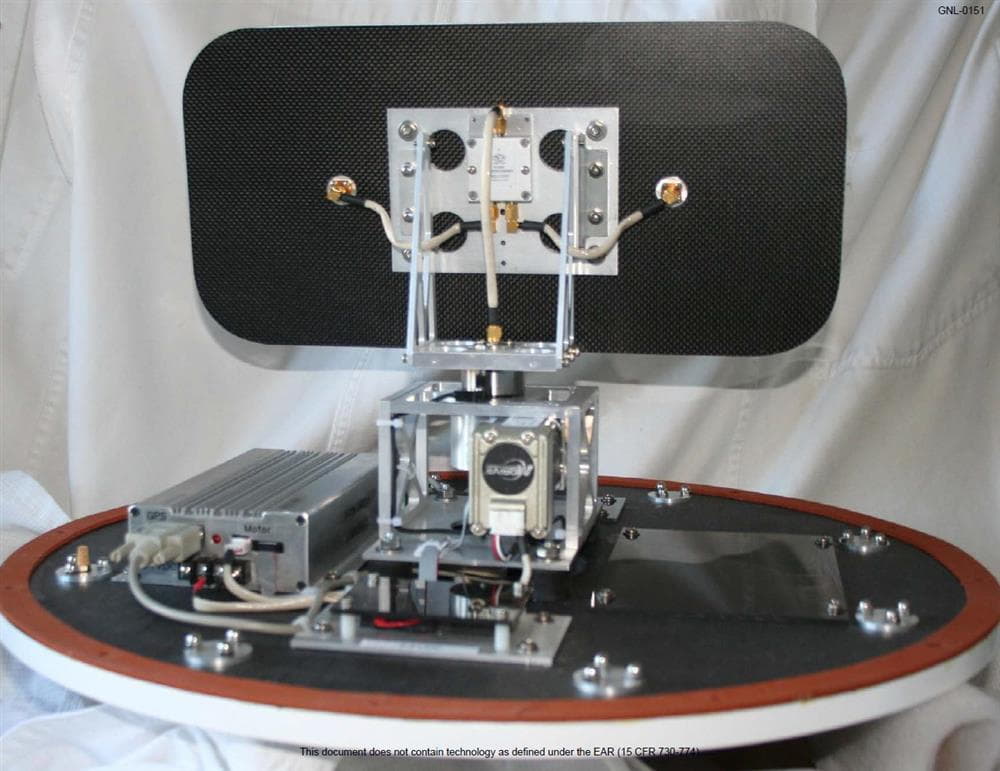
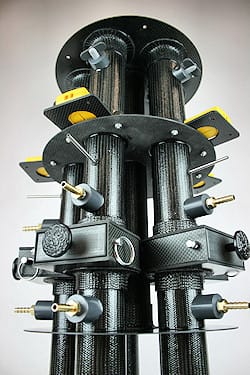
DragonPlate carbon fiber was chosen for this project for its strength, light weight, and resilience to low temperatures. This is used in a measurement device that goes above 120,000 ft in arctic regions.

Ready to Get Your Project Started?
Contact Us for a Quote
Loading...