Carbon Fiber Sheets & Plates — Buyer's Guide
Choosing a Sheet
DragonPlate® offers ten solid carbon fiber sheet product lines. They differ in layup, construction, finish, temperature rating, and price — but choosing comes down to two independent decisions. The first is layup — unidirectional (0°), orthotropic (0/90), or quasi-isotropic (0/90/±45) — which sets the directions in which the sheet is stiff. The second is construction — the fabric form (woven, unidirectional, or a hybrid) and the resin system (epoxy for most lines, phenolic for High Temp). Together, these determine temperature rating, fiber volume, finish, thickness range, and price. Most layups are available in more than one construction: quasi-isotropic, for example, can be bought in four different ways. Pick the layup your loads require first, then the construction that fits your finish, temperature, and budget needs.
Which sheet type should I choose?
| Sheet type | Construction / ply orientation | Fiber modulus | Max temp | Stocked sizes | Stocked thicknesses | Choose it when… |
|---|
| EconomyPlate™ | Orthotropic twill weave, 0°/90° | Standard (33 Msi) | 140°F | 6"×6" – 48"×96" | 1/32"–3/4", 2–5mm | Cost is the priority and loads are along the 0/90 axes — for less demanding applications |
| Quasi-isotropic (woven) | All woven fabric, 0/90 and ±45 | Standard (33 Msi) | 140°F | 6"×6" – 24"×48" | 1/32"–1/2",1–3mm | Load direction is unpredictable or off-axis — 0/90-only layups deflect up to 50% more in off-axis bending; cosmetic face options |
| Uni Prepreg | All unidirectional plies: UD 0, UD 0/90, or quasiiso (UD 0/90/±45) | Standard (33 Msi; UTS 700 fiber, 55% fiber volume) | 250°F | 6"×6" – 24"×36" | 1/16"–1/2", 1–2mm | The highest-performance standard-modulus construction — pick the layup for your loads: 0° for beams/spars, 0/90 for two-axis, quasi-iso for off-axis |
| Twill/Uni Prepreg | UD core with satin twill weave faces — 0/90 or quasi-iso core | Standard (33 Msi) | 250°F | 6"×6" – 24"×36" | 1/32"–1/2", 1–2mm | Uni-prepreg structural performance plus a satin cosmetic finish on both sides |
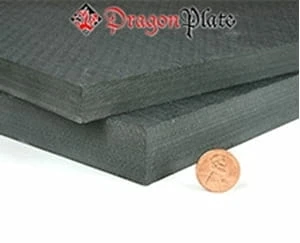
| Twill Prepreg | Woven 0/90 twill prepreg throughout — 0/90 or quasi-iso | Standard (33 Msi) | 250°F | up to 24"×24" | 1/2", 3/4", 1", 1-1/4", 1-1/2" | The thick-plate line: woven prepreg plates for machining and heavy structural sections |
| High Modulus | UD (Uni or Twill/Uni) in 57 Msi fiber (110 Msi UHM by request) | High (57 Msi) / Ultra High (110 Msi) | 250°F | 12"×12" – 24"×36" (custom to 30"×40") | 1/16"–1/4" (custom to 1/2") | Deflection is the constraint: ~2× the stiffness of standard uni prepreg, about 50% stiffer than aluminum at half the weight. Made to order (10–15 days), non-returnable |
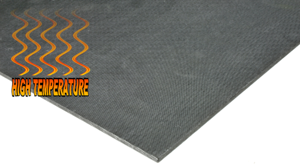
| High Temp Prepreg | Woven 0/90 carbon/phenolic prepreg | Standard (33 Msi) | 500°F | 12"×12" – 24"×36" | 0.075", 1/8", 0.2", 1/4" | Heat or flame exposure: rigid to 500°F, flame retardant phenolic resin survives short direct flame contact |
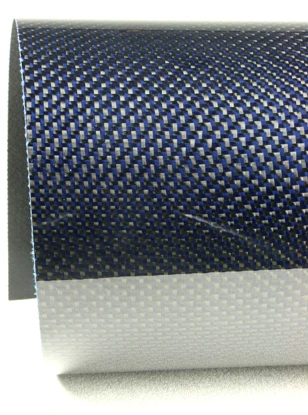
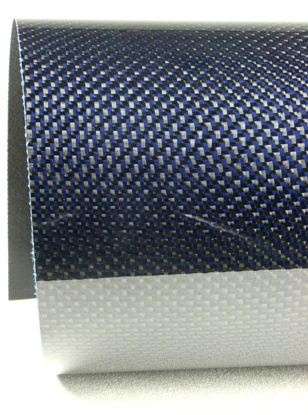
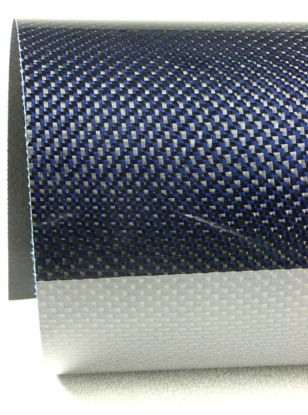
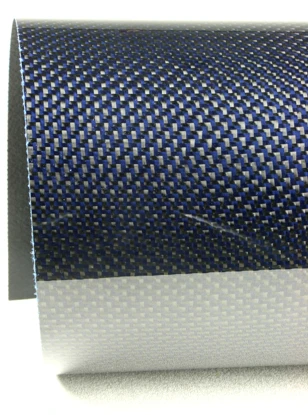
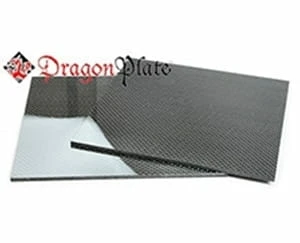
| Two Sided CF | Woven 0/90 twill, finished both faces | Standard (33 Msi) | 140°F | per listings | 0.035", 1/16"+ | Both faces are visible: mirror-gloss finish on both sides, UV-resistant |
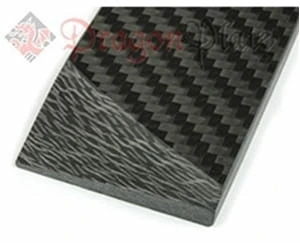
| ArtisanPlate™ | All-twill weave through the full thickness, satin finish both sides | Standard (33 Msi) | 250°F | per listings | 1/16"–1/2" | Shaping and sculpting applications — the woven look runs through the full thickness |
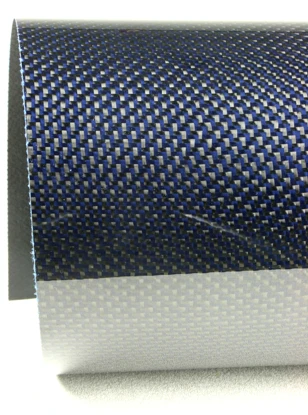
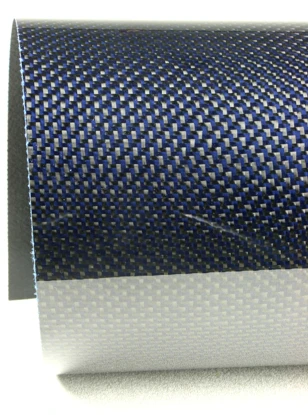
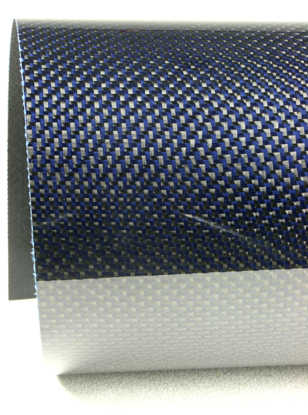
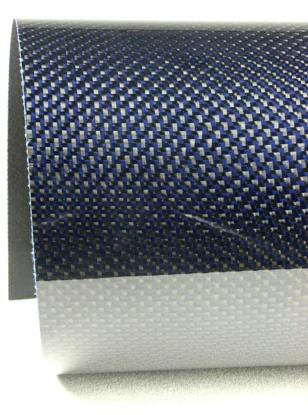
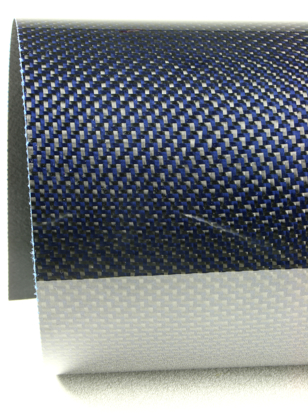
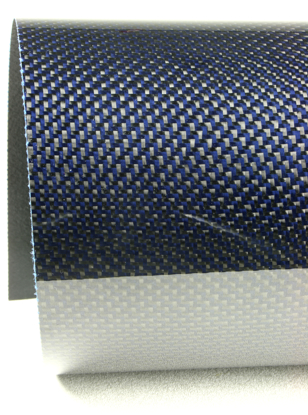
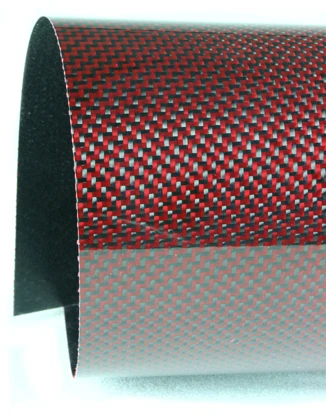
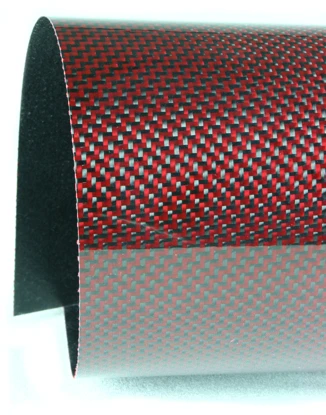
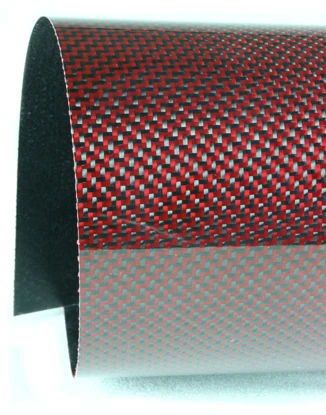
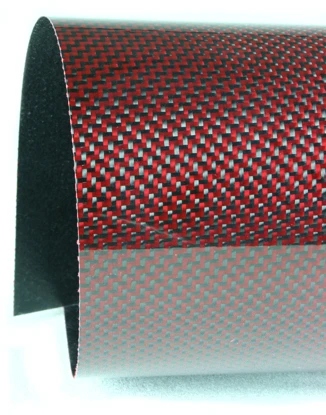
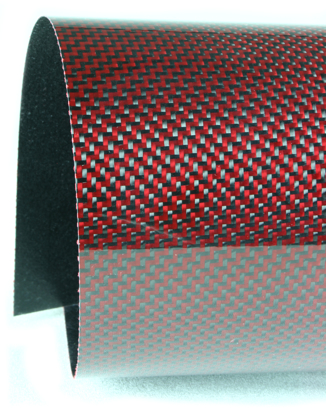
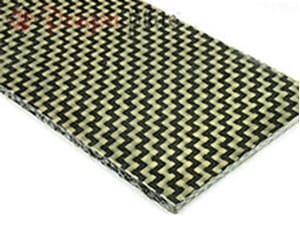
| Carbon/Kevlar Hybrid | Twill carbon/Kevlar weave (red/yellow/blue/black) | Standard (33 Msi) | 140°F | per listings | 1/16", 1/8" | Impact/abrasion resistance or colored aesthetic is needed alongside stiffness |
Density and weight by sheet type
Resin system and fiber volume differ by product line, so density does too — EconomyPlate™ is 7-10% lighter per volume than some prepreg lines. Use this table to estimate panel weight; the approximate weight of every SKU is published in the Specifications tab of its product listing.
| Sheet type | Approx. Density (lb/in3) | ≈ g/cm3 | Weight per ft2 per 1/8" thickness |
|---|
| EconomyPlate™ | 0.052 | 1.44 | 0.94 lb |
| Quasi-isotropic (woven) | 0.055 | 1.52 | 0.99 lb |
| Two Sided CF | 0.055 | 1.52 | 0.99 lb |
| Uni Prepreg | 0.056 | 1.55 | 1.01 lb |
| ArtisanPlate™ | 0.056 | 1.55 | 1.01 lb |
| High Temp (phenolic) | 0.057 | 1.58 | 1.03 lb |
| Twill Prepreg | 0.057 | 1.58 | 1.03 lb |
| Twill/Uni Prepreg | 0.058 | 1.61 | 1.04 lb |
| High Modulus | 0.058 | 1.61 | 1.04 lb |
| Carbon/Kevlar hybrid | 0.050 | 1.38 | 0.90 lb |
| Kevlar | 0.044 | 1.22 | 0.79 lb |
To estimate any panel weight: weight (lb) = length (in) × width (in) × thickness (in) × density (lb/in3). Per square foot: lb/ft2 = 144 × thickness (in) × density.
Frequently asked selection questions
What is the difference between EconomyPlate™ and DragonPlate®'s prepreg sheets?
EconomyPlate™ is an orthotropic laminate — twill weave fabric at 0°/90° in a symmetrical, balanced layup — built for less demanding applications where cost matters most (max temp 140°F, density 0.052 lb/in3). The prepreg lines (Uni, Twill/Uni, Twill) are built from pre-impregnated unidirectional and/or twill fabrics with controlled fiber volume (55% uni), a 250°F service temperature, and slightly higher density (0.056–0.058 lb/in3). They are the stiffest and strongest standard-modulus options.
When do I need quasi-isotropic instead of 0/90?
When loads are off-axis or unpredictable. With only 0° and 90° plies, a sheet is weakest along the 45° diagonal — finite element analysis shows up to 50% higher deflection in off-axis bending versus a quasi-isotropic layup. Quasi-isotropic sheets provide near-axis-symmetric torsional stiffness and robust resistance to complex load patterns. For loads aligned with the sheet axes, 0/90 sheets are sufficient and more economical.
DragonPlate® lists quasi-isotropic sheets in several categories — what's the difference?
Quasi-isotropic is a layup (plies at 0°, 90°, and ±45°), and DragonPlate® builds it in four constructions. They share the same stiffness symmetry but differ in material system, temperature rating, finish, and thickness range:
| Quasi-iso option | Construction | Max temp | Density (lb/in3) | Finish | Pick it when |
|---|
| Quasiisotropic Carbon Fiber Sheets | All woven fabric | 140°F | 0.055 | Gloss, matte, or textured face (plain or twill weave) | You want the classic DragonPlate look with finish options at the best price; ships in 2–5 days |
| Quasiisotropic Uni Sheets (under Uni Prepreg) | All unidirectional prepreg plies — high fiber volume (55%) | 250°F | 0.056 | Texture/Texture | You want the stiffest, strongest quasi-iso, and the panel is structural, not cosmetic |
| Quasiisotropic Twill/Uni Sheets (under Twill/Uni Prepreg) | UD prepreg quasi-iso core with satin twill faces | 250°F | 0.058 | Satin/Satin (both sides) | You want prepreg performance and a finished carbon look on both faces |
| Quasiisotropic Twill Prepreg Plates (under Twill Prepreg) | All woven twill prepreg | 250°F | 0.057 | Texture/Texture | You need a thick quasi-iso plate (1/2"–1-1/2") for machining |
The practical shorthand: the standalone quasi-iso category is the economical, cosmetic-friendly woven version; the prepreg versions trade finish options for higher temperature rating and the higher stiffness of no-crimp prepreg plies.
When is High Modulus worth the premium?
When minimum thickness, weight, and deflection are critical. High modulus sheets (57 Msi fiber) are almost twice as stiff as standard uni prepreg and about 2.5x as stiff as standard DragonPlate® sheets — roughly 50% stiffer than aluminum at half the weight. Note they are made to order (10–15 days) and not returnable. Ultra High Modulus (110 Msi) is available for extreme-stiffness applications such as metrology and instruments.
Which sheet handles heat or flame?
High Temp Prepreg sheets use a carbon fiber/phenolic system that keeps most of its rigidity to 500°F and tolerates short excursions higher. The phenolic resin is flame-retardant and survives brief direct flame contact. Standard epoxy lines are rated 140°F (EconomyPlate™, quasi-iso, Two Sided, Carbon/Kevlar) or 250°F (the prepreg lines, including ArtisanPlate™).
Which sheet looks best when both faces are visible?
For a mirror-gloss show finish, Two Sided CF sheets carry DragonPlate®'s gloss twill finish on both faces and are UV resistant; ArtisanPlate™ offers satin twill on both sides, with the woven look running through the full thickness. For structural panels where both faces are seen, the pressed Twill/Uni prepreg sheets (standard and High Modulus) have a satin twill outer layer on both sides — a classic carbon fiber look with prepreg stiffness. And if only one face shows, EconomyPlate™ is the economical route: the standard finish options — high gloss, matte, or textured — are available on the cosmetic face, over a textured bonding back.
What if the panel needs to take impacts?
Carbon/Kevlar hybrid sheets weave Kevlar into the laminate for impact and abrasion resistance, in black plus red, yellow, or blue accent colors.
What finish options are available?
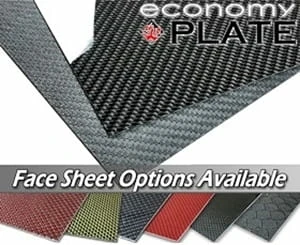
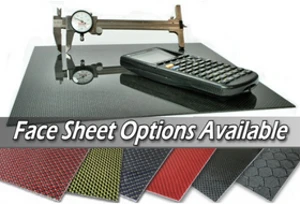
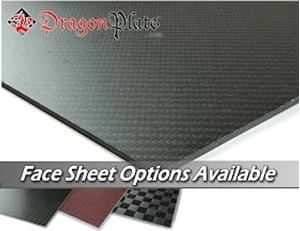
Six finish combinations appear across the catalog — Texture/Texture, Matte/Texture, Satin/Satin, Gloss/Texture, Gloss/Gloss, and Matte/Matte (for example, Gloss/Texture is a gloss cosmetic face over a textured reverse). Availability varies by line: EconomyPlate™ offers texture, matte, or gloss over a textured bonding face; Twill/Uni prepreg is satin both sides; Two Sided CF is gloss both sides. A textured face is the ideal bonding surface.
Sizes, Customization & Ordering
What is the largest sheet size available?
DragonPlate® offers sheets as large as 48" × 96" and thicknesses up to 1-1/2" in select product lines. Stocked sizes run from 6" × 6" up through 12"×12", 12"×24", 24"×24", 24"×36", 24"×48", 48"×48", and 48"×96"; availability varies by line (see the selector table above).
Do you offer custom cut-to-size sheets?
Yes. CNC cutting, custom sheet sizes, and specialized laminate schedules are available, with full custom fabrication through the Element6 Composites division. Call 315-252-2559 or use the website contact form for a quote.
Ordering basics
The listed price covers the sheet itself — shipping, taxes, and handling are additional and calculated at order. Payment is prepaid by credit card, check, or wire; approved buyers may qualify for Net 30 terms. Bulk pricing is available by quote. Lead times vary by line: EconomyPlate™ typically ships quickest, quasi-isotropic in 2–5 days, uni and twill/uni prepreg in 3–5 days, Two Sided sheets and twill prepreg plates in 7–10 days, and High Modulus and High Temp sheets in 10–15 days; High Modulus sheets are made to order and not returnable.
Working with Carbon Fiber
Can I cut and drill carbon fiber sheets myself?
Yes. DragonPlate® sheets can be cut by hand or with common shop tools — a hacksaw, coping saw, jigsaw, bandsaw, or a Dremel-type rotary tool — and drilled with a standard drill bit, though high-speed steel dulls quickly on carbon fiber. Match the blade to the tool: hand and power saws cut well with a fine-toothed blade, while a Dremel works best with a diamond-grit wheel. When drilling, back the sheet with a sacrificial board so the bit exits into support — this keeps the fibers from chipping or splintering on the back face. If you're cutting on a CNC machine, use carbide tooling — DragonPlate® typically uses burr-style end mills rather than standard 2-, 3-, or 4-flute cutters
Carbon fiber dust is an irritant: DragonPlate® recommends safety glasses, a dust respirator, and protective clothing, and it is good practice to work in a ventilated area and capture dust with a HEPA vacuum. For complex shapes, tight tolerances, or thick plates, DragonPlate®'s CNC cutting service is the better path.
What adhesive should I use to bond carbon fiber sheets?
DragonPlate® recommends and stocks several structural adhesives proven with its laminates, including 3M Scotch-Weld epoxies (2216 B/A, DP420, DP460NS and others) and LOCTITE EA-series epoxies, plus Double/Bubble epoxy packs for small jobs. Prepare surfaces by lightly sanding before bonding or painting; the textured face of each sheet is designed as a bonding surface. Datasheets for every adhesive are on the Weights & Specs page.
Limitations to know before you buy
Carbon fiber/epoxy sheets are not thermoformable — they cannot be reshaped with heat. Standard epoxy lines are rated to 140°F and prepreg lines to 250°F; only the phenolic High Temp line reaches 500°F. DragonPlate® does not make aftermarket automotive or motorcycle parts. High Modulus sheets are made to order and not returnable.
Technical resources: The Ultimate Guide to Carbon Fiber Design and Application · CAD models · Weights & Specs + adhesive datasheets
Company & Quality
Are DragonPlate® sheets made in the USA?
Yes. DragonPlate® is a brand of Allred & Associates Inc., and all products are manufactured at its headquarters in Elbridge, New York (west of Syracuse). The facility is ISO 9001:2015 certified by Bureau Veritas — view the certificate. DragonPlate® uses only first-quality materials, never off-spec.
Support: 315-252-2559 (Mon–Fri, 8:30am–5:00pm ET) · [email protected]
/StackedPlates2-1 600x400.png)