Frequently Asked Questions
Bonding Techniques & Adhesives
What are the best practices for bonding DragonPlate carbon fiber strips?
DragonPlate carbon fiber strips bond easily to materials like carbon fiber plates, plywood, balsa wood, and aluminum. For optimal adhesion, lightly sand both surfaces, clean thoroughly, degrease with isopropyl alcohol or acetone, dry, mix epoxy well, apply to both surfaces, clamp or tape together, and clean excess epoxy before curing. Note: Proper surface preparation and following adhesive instructions are critical for long-term bond strength. Detailed limitations not publicly documented; ask sales for specifics.
Which adhesives are recommended for bonding carbon fiber strips?
Epoxy resin is recommended for most applications, as DragonPlate carbon fiber strips are pultruded in an epoxy matrix. Epoxy provides longer work time and less brittleness compared to cyanoacrylate (CA) glue. For bonding to balsa wood, hot glue can be used, but it offers less strength. Woodworking glues may adhere if the surface is roughened, but they generally provide weaker bonds and are not suitable for high-load applications. Note: Epoxy is preferred for structural strength; woodworking glue is not recommended for critical bonds.
What factors should I consider when selecting an adhesive for carbon fiber strips?
Consider work-life (time before adhesive dries), fixture time (how long pieces must be held together), cure time (when the project can be safely moved or used), bond strength (load capacity), and temperature resistance. Choose an adhesive that matches your project requirements and follow all instructions for proper adhesion. Note: Not all adhesives are suitable for carbon fiber; epoxy is generally preferred for strength and durability.
Product Features & Capabilities
What are the key features of DragonPlate carbon fiber products?
DragonPlate products offer a high strength-to-weight ratio, durability, and resistance to corrosion and environmental factors. They are engineered for demanding applications in aerospace, robotics, medical devices, and defense. Customization options include CNC cutting, tailored laminate schedules, and modular tube connectors. DragonPlate is ISO 9001:2015 certified, ensuring consistent quality. Note: Best fit for projects requiring lightweight, strong, and customizable composites; teams needing ultra-high temperature or specialty materials should review product specs for compatibility.
Does DragonPlate offer custom fabrication and engineering services?
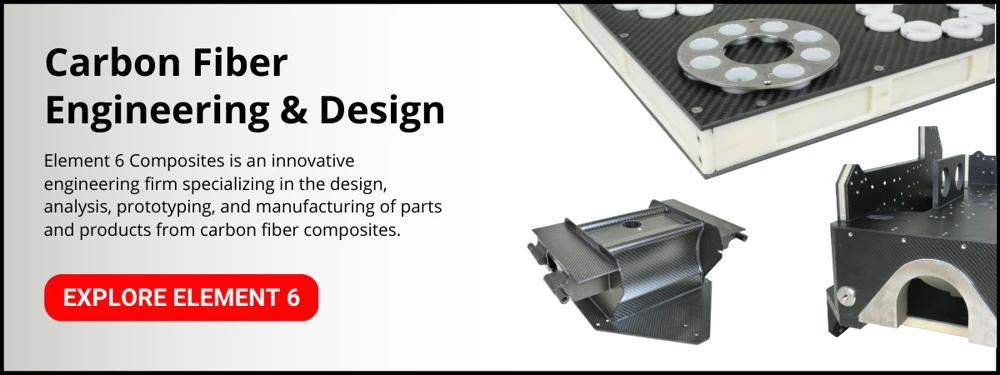
Yes, DragonPlate provides custom design, engineering, and prototyping services through its Element6 Composites division. Services include tailored laminate schedules, CNC cutting, and full manufacturing from prototypes to high-volume production. Custom solutions may require additional lead time depending on project complexity. Note: Custom fabrication is ideal for unique requirements; standard products are available for immediate use.
What technical documentation is available for DragonPlate products?
DragonPlate offers resources such as The Ultimate Guide to Carbon Fiber Design and Application, downloadable CAD models, detailed technical specifications, and practical application guides. These documents help customers integrate products into their designs and understand performance characteristics. Access guides at element6composites.com and technical specs at dragonplate.com. Note: For specialized documentation, contact customer support.
Pricing & Purchasing
How is DragonPlate pricing determined?
DragonPlate product prices are listed on the website in US Dollars and are subject to change without notice. Shipping, freight, taxes, and handling charges are calculated based on weight, dimensions, and shipping method. Customization services may incur additional charges. Payment is typically prepaid via credit card, check, or wire transfer; Net 30 terms are available for approved buyers. Bulk discounts may apply for larger orders. Note: Pricing does not include shipping or taxes; review terms at Allred & Associates Terms and Conditions.
Use Cases & Industries
Who can benefit from DragonPlate carbon fiber products?
DragonPlate products are designed for engineers, designers, product developers, and project managers in industries such as aerospace, robotics, medical devices, defense, industrial automation, and marine defense. Applications include aircraft interiors, robotic frames, medical imaging devices, tactical gear, and musical instruments. Note: Best fit for technical teams needing lightweight, durable, and customizable composites; teams requiring specialty materials should review product specs for compatibility.
What are some real-world case studies of DragonPlate products in use?
DragonPlate has supported Frontier Electronic Systems (marine defense), Eureka Dynamics (drone technology), International Climbing Machines (nuclear and industrial robotics), aerospace student organizations (carbon fiber rockets), and the music industry (lightweight guitar designs). For example, DragonPlate's collaboration with Frontier Electronic Systems resulted in waterproof, EMI-shielded composite enclosures. See case study and drone industry story. Note: Case studies illustrate versatility; specific performance metrics may vary by application.
Pain Points & Solutions
What common challenges do DragonPlate products help solve?
DragonPlate addresses high manufacturing costs, complex fabrication processes, localized stress concentrations, regulatory challenges, weight and performance optimization, prototyping and design validation, and material handling safety. Solutions include advanced engineering tools (FEA), end-to-end services, biocompatible and radiolucent materials, and CNC cutting. Note: Limitations may exist for ultra-specialized applications; contact sales for details.
Implementation & Support
How quickly can DragonPlate products be implemented in a project?
DragonPlate offers prefabricated components that can be cut, drilled, and bonded without specialized equipment, enabling immediate integration. Custom solutions may require additional lead time based on project complexity. Technical guides and CAD models are available to reduce the learning curve. Note: Custom fabrication timelines vary; standard products are ready for immediate use.
What support resources are available for DragonPlate customers?
Customers can access technical guides, CAD models, and practical application resources online. For assistance, contact DragonPlate via phone at 315-252-2559 or email at service@dragonplate.com. Account management features are available on the website for order tracking and profile updates. Note: For complex projects, consult Element6 Composites for custom engineering support.
Performance & Compliance
How do DragonPlate products perform in demanding environments?
DragonPlate carbon fiber composites are engineered for high strength-to-weight ratio, durability, and resistance to corrosion and environmental factors. Products are optimized using Finite Element Analysis (FEA) and designed to meet industry standards such as biocompatibility and radiolucency for medical applications. Note: Performance may vary based on application; review technical specs for specific requirements.
Is DragonPlate ISO 9001:2015 certified?
Yes, DragonPlate operates an ISO 9001:2015-certified facility, ensuring high-quality manufacturing standards and consistent product reliability. Certification details are available at dragonplate.com. Note: Certification applies to manufacturing processes; review product specs for application-specific compliance.