Frequently Asked Questions

Product Information

What are carbon fiber idler rollers?

Carbon fiber idler rollers are cylindrical components used in conveyor systems to support and guide materials as they move along the conveyor. Unlike traditional rollers made from steel, aluminum, or plastic, carbon fiber idler rollers are constructed from lightweight carbon fiber tubes, offering high strength, stiffness, and resistance to fatigue. These rollers are available in various diameters and can be customized with different inserts for specific assembly requirements. Note: Carbon fiber idler rollers may not be suitable for all conveyor environments; consult with DragonPlate for application-specific guidance.

How are carbon fiber idler rollers constructed?

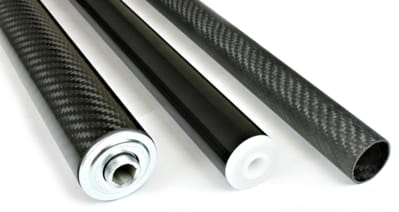
DragonPlate carbon fiber idler rollers are made from low-weight carbon fiber tubes, which can be produced in a range of diameters and strength characteristics. They can be customized with various inserts to provide specific functionality as a finished assembly. The construction leverages carbon fiber's high strength-to-weight ratio and dimensional stability. Note: Customization options may require additional lead time; contact DragonPlate for details.

Features & Capabilities

What are the main advantages of carbon fiber idler rollers compared to metal or plastic rollers?

Carbon fiber idler rollers offer several advantages over traditional metal or plastic rollers:

Note: While carbon fiber rollers excel in many demanding applications, they may not be the best fit for extremely abrasive environments or where cost is the primary concern; detailed limitations not publicly documented—ask sales for specifics.

What material properties make carbon fiber suitable for idler rollers?

Carbon fiber is ideal for idler rollers due to its high strength-to-weight ratio, excellent fatigue resistance, low coefficient of thermal expansion, and superior resistance to chemicals and corrosion. These properties help carbon fiber rollers withstand constant physical forces, reduce friction on bearings, and lower maintenance and power consumption in conveyor systems. Note: For applications with unique chemical exposures or extreme temperatures, consult DragonPlate for compatibility.

Can carbon fiber idler rollers be customized for specific applications?

Yes, DragonPlate offers turnkey solutions and custom fabrication services for carbon fiber idler rollers. Options include different tube diameters, strength characteristics, and inserts for specialized assembly requirements. Custom CNC cutting and tailored laminate schedules are also available to meet unique performance and design needs. Note: Custom solutions may require additional engineering time and cost; contact DragonPlate for a quote. Explore customization options.

Use Cases & Benefits

What types of conveyor systems benefit most from carbon fiber idler rollers?

Conveyor systems that handle heavy materials, operate in environments with chemical exposure, or require reduced maintenance and downtime benefit most from carbon fiber idler rollers. Applications include mining conveyors (handling heavy ore), metal part production lines (subject to corrosion inhibitors and cleaning agents), and automated sorting lines. Note: For extremely abrasive or high-impact environments, additional evaluation may be required; ask DragonPlate for application-specific recommendations.

How do carbon fiber idler rollers reduce maintenance and operating costs?

Due to their light weight, carbon fiber idler rollers reduce friction on bearings and lower the load on conveyor motors, resulting in less maintenance and reduced power consumption. Their resistance to warping, corrosion, and fatigue also minimizes downtime and extends the service life of conveyor systems. Note: Initial investment may be higher than standard rollers; long-term savings depend on application specifics.

Are there real-world examples of cost savings or performance improvements from using carbon fiber idler rollers?

Yes, DragonPlate's carbon fiber solutions have enabled significant weight reductions and performance improvements in industrial automation and robotics. For example, one customer achieved $1 million in annual savings by implementing a custom carbon fiber robotic arm solution. While this case study is not specific to idler rollers, it demonstrates the potential business impact of switching to carbon fiber components. Note: Results may vary based on application; detailed case studies for idler rollers are not publicly documented. Read the case study.

Technical Requirements & Documentation

What technical documentation is available for carbon fiber idler rollers?

DragonPlate provides a range of technical resources, including downloadable CAD models, technical specifications, and guides on carbon fiber design and application. These resources help engineers integrate carbon fiber idler rollers into their systems and ensure proper material selection. Note: Product-specific data sheets for idler rollers may not be available online; contact DragonPlate for detailed documentation. Access CAD models | View weights and specs

Are carbon fiber idler rollers compliant with industry standards?

All DragonPlate products, including carbon fiber idler rollers, are manufactured under ISO 9001:2015 quality standards at the company's facility in Elbridge, New York. This certification ensures consistent quality and reliability for industrial applications. Note: For industry-specific compliance (e.g., food-grade, medical), consult DragonPlate for documentation and suitability.

Support & Implementation

How easy is it to implement carbon fiber idler rollers in an existing conveyor system?

DragonPlate offers prefabricated carbon fiber rollers that can be integrated into conveyor systems with standard cutting, drilling, and bonding techniques. For custom requirements, DragonPlate provides design and engineering support, including CAD models and technical guides. Most off-the-shelf products can be used immediately, while custom solutions may require additional lead time. Note: Compatibility with existing hardware should be verified before purchase.

What support options are available for customers considering carbon fiber idler rollers?

DragonPlate provides customer support via phone (315-252-2559, Mon-Fri 8:30am – 5:00pm ET), email (service@dragonplate.com), and an online contact form. Technical resources, FAQs, and shipping information are also available on the website. For complex projects, DragonPlate offers engineering consultation and custom fabrication services. Note: Response times may vary based on inquiry complexity. Contact DragonPlate

Loading...

What Are Carbon Fiber Idler Rollers?
Conveyor systems have played a critical role in the evolution of industrial technology and material handling. The most famous use of conveyors was when Henry Ford created the model of modern assembly lines that revolutionized efficiency through the movement of materials and goods.

These systems are designed to move objects of different weights, shapes, sizes, and used in a variety of operating environments. One of the fundamental components of conveyor systems is idler rollers (also known as conveyor rollers) which are a series of free-flowing, cylindrical “wheels” in both gravity (unpowered) and powered conveyors, which use mechanical means to move products or materials along the system. As a key component, there are several considerations in the design of an idler roller to minimized downtime, operating costs, and performance in a conveyor system.

Carbon Fiber Material for Idler Rollers

Traditionally, idler rollers are constructed of metal (steel or aluminum) or plastic. Their design will depend on the application for determining both the size or diameter as well as the materials of construction. Carbon fiber is now an attractive option because of its inherent light weight and material strength. At 1/5th the weight of steel, half the weight of aluminum, and durability beyond plastic or rubberized rollers, their material properties provide clear advantages in performance and reliability

Carbon fiber idler rollers are constructed of low-weight, carbon fiber tubes and available in many diameters, strength characteristics, and options for inserts to provide customized functionality as a finished assembly. From a material standpoint, they are characterized by:

  • High strength and stiffness to weight ratio
  • Excellent resistance to fatigue
  • Dimensional stability: Low CTE (Coefficient of Thermal Expansion)
  • Resistance to chemical exposure and corrosion

These mechanical characteristics withstand the constant physical forces in conveyor systems operation. Carbon fiber rollers, because of their light weight, reduce friction on bearings while reducing the load on motors that result in less maintenance and power consumption.

Specific Application Advantages

Material Strength

The movement of heavy materials can cause metal rollers to warp, bend, and suffer from general wear over time due to their sheer weight. The impact force of loading materials such as heavy ore on mining conveyors or scrap metal onto sorting lines can also cause deformation of the rollers that result in decreased performance or even production stops for maintenance. Carbon fiber idler rollers minimize these effects because of their stiffness and resistance to fatigue when compared to aluminum or steel.

Chemical and Heat Resistance

Manufacturing environments often contain in-line “washing” stations on manufacturing and assembly lines to clean, pretreat, or rinse products traveling on conveyor lines through the process. These products will often be subjected to a variety of chemicals and operating temperatures. For example, in metal part production, corrosion inhibitors, cleaning agents, or surface treatments will be applied to the parts before final assembly or packaging. Metal part companies generally produce many types of metals with varying production methods. The chemicals used will have a range of pH levels (corrosivity) and applied at varying temperatures.

This will affect the materials of the construction of the conveyor system including the idler rollers. While steel alloys, aluminum, and plastics are commonly used and some resistance to chemical attacks and heat, they all may not be suited to the agents used in the process. The operating environments with fluctuations in temperatures also may cause failures due to warping.

The material properties of carbon fiber satisfy nearly all of the design considerations for idler rollers. Their high strength and stiffness for wear, impact, and temperature combined with chemical resistance should be considered in conveyor systems.

When designing advanced materials such as carbon fiber into a conveyor or automation project, engineers must determine which material properties are most important for specific applications. Turnkey solutions are also available to provide fully integrated assemblies as part of the custom carbon fiber fabrication and in-house design services.

Contact DragonPlate to find a creative solution to bridge the gap between cost and performance needs.

Loading...