Frequently Asked Questions

Cutting & Fabrication Guidance

What are the recommended tools for cutting DragonPlate carbon fiber sheets?

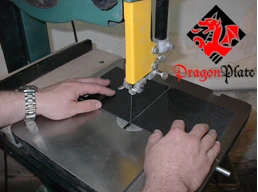
DragonPlate carbon fiber sheets can be cut using a variety of tools, including bandsaws, scrollsaws, jigsaws, or table saws equipped with fine-tooth carbide blades. For smaller or more intricate work, a Dremel tool with a tungsten carbide wheel is effective. CNC routers with carbide bits are suitable for precision and complex shapes, while hacksaws and coping saws can be used for straight or interior cuts. Angle grinders and jigsaws with tungsten carbide blades are also options for larger or curved cuts. Note: Cutting carbon fiber will cause more wear on blades than cutting wood or plastic. Laser cutters are not recommended, as they can burn the epoxy and damage the fibers. Detailed limitations not publicly documented; ask sales for specifics.

What is the safest way to cut carbon fiber sheets?

To safely cut carbon fiber sheets, use tools with the finest possible cutting edge, such as fine-grit blades or abrasive wheels. Mark your cut line and cut slightly wide of the mark, then sand back to the line to remove chips or splinters. Always work on a stable surface, such as wood or high-density foam, and allow the cut piece to fall safely. Avoid coarse-toothed blades, which can splinter or chip the material. Note: Water jet cutting can cause delamination if not properly supported; pre-drilling holes may help. Laser cutting is not recommended due to burning and poor edge quality.

How do you finish the edges of cut carbon fiber sheets?

After cutting, edges can be finished using a sanding block with progressively finer sandpaper, starting with coarse grit and moving to 200-grit or higher for a polished finish. For detailed areas, use fine-toothed metalworking files or rolled-up wet/dry sandpaper. For harsh environments, sealing the edges with a two-part epoxy laminating resin is recommended to prevent moisture ingress and provide a glossy, sealed finish. Note: Over-sanding can damage the laminate; proceed carefully.

What safety precautions should you take when cutting carbon fiber?

When cutting carbon fiber, always work in a well-ventilated area and use dust extraction equipment, such as a shop vac or downdraft table, to minimize airborne particles. Wear respiratory protection (a dust mask for occasional use or a reusable respirator for frequent cutting), eye protection, and thin gloves to protect against sharp edges and dust irritation. Wash any dust off your skin with water. Note: Carbon fiber dust is an irritant but not toxic; however, improper handling can cause skin, eye, or lung irritation and equipment wear due to electrical conductivity and abrasion.

Can you cut carbon fiber sheets with a laser cutter?

Laser cutting is not recommended for carbon fiber sheets. The laser burns the epoxy before cutting the fibers, resulting in a burned cut line and poor edge quality. For best results, use mechanical or abrasive cutting methods as described above. Note: Attempting laser cutting may damage both the material and the equipment.

What are the recommended CNC settings for cutting DragonPlate carbon fiber sheets?

For CNC cutting of DragonPlate carbon fiber sheets, use a 1/8" Burr Style Solid Carbide Downcut Bit. Recommended spindle speeds are 10,000 RPM. For 1/16" sheets, cut at 60" per minute; for 1/32" sheets, 70" per minute; and for veneer, 75" per minute. Adjust settings based on material thickness. Note: Incorrect settings can cause delamination or excessive tool wear.

Is water jet cutting suitable for DragonPlate carbon fiber sheets?

Water jet cutting can be used for large pieces or hard-to-reach areas, especially with quasi-isotropic, uni/twill, or twill prepreg plates. However, the piercing step can cause delamination unless the product is properly supported or pre-machined with holes. Experimentation and experience are required for optimal results. Note: Water jet cutting is not ideal for all carbon fiber laminates and may require additional finishing.

Product Features & Technical Resources

What types of carbon fiber products does DragonPlate offer for cutting and fabrication?

DragonPlate offers a wide range of carbon fiber products suitable for cutting and fabrication, including solid sheets and plates, sandwich sheets, tubes (round, square, rectangular, hexagonal, tapered, airfoil, large diameter, telescoping), structural components (angles, I-beams, C-channels, D-tubes, hat stiffeners), modular tube connectors, flame-retardant and high-temperature composites, Kevlar composites, adhesives, and fasteners. Note: Some specialty products may require specific cutting techniques; consult product documentation for details.

Where can I find technical documentation and CAD models for DragonPlate products?

Technical documentation, including the Ultimate Guide to Carbon Fiber Design and Application, downloadable CAD models, and detailed technical specifications, are available on the DragonPlate website. Access the guide at element6composites.com, CAD models at dragonplate.com/cad-models, and technical specs at dragonplate.com/dragonplate-weights-specs. Note: Some resources may require registration or additional permissions.

Implementation & Support

How easy is it to start using DragonPlate products for fabrication projects?

DragonPlate products are designed for ease of integration. Prefabricated components can be cut, drilled, and bonded with standard tools, and comprehensive guides and CAD models are available to support new users. For custom projects, DragonPlate offers design, prototyping, and manufacturing services through its Element6 Composites division. Most off-the-shelf products can be used immediately, while custom solutions may require additional lead time. Note: Complex customizations may extend project timelines; consult with DragonPlate for estimates.

What support resources are available if I have questions about cutting or fabricating DragonPlate products?

DragonPlate provides customer support via phone at 315-252-2559 and email at service@dragonplate.com. Comprehensive FAQs, technical guides, and documentation are available on the website. For complex or custom projects, the Element6 Composites team offers engineering and prototyping support. Note: Response times may vary based on inquiry complexity.

Pain Points & Limitations

What are common challenges when cutting carbon fiber, and how does DragonPlate address them?

Common challenges include tool wear, risk of splintering or delamination, dust generation, and achieving smooth edges. DragonPlate addresses these by recommending fine-grit or abrasive tools, providing detailed cutting and finishing guides, and offering CNC cutting services for precision. Safety recommendations help mitigate dust and splinter risks. Note: Some cutting methods, such as water jet or laser, have specific limitations and may not be suitable for all products.

Use Cases & Success Stories

What industries use DragonPlate carbon fiber products for fabrication and cutting?

Industries using DragonPlate products include aerospace, robotics, medical devices, defense, marine defense, drone technology, nuclear and industrial robotics, and the music industry. Case studies include collaborations with Frontier Electronic Systems (marine defense), Eureka Dynamics (drone test beds), International Climbing Machines (robotics), aerospace student organizations (rockets), and musical instrument manufacturers (guitars). Note: Some industries may require specialized compliance or finishing steps; consult DragonPlate for details.

Can you share examples of successful projects involving DragonPlate carbon fiber fabrication?

Yes. Notable examples include: Frontier Electronic Systems used DragonPlate for marine defense electrical enclosures; Eureka Dynamics improved drone test bed systems with carbon fiber components; International Climbing Machines developed wall-climbing robots with composite chassis; aerospace student teams built carbon fiber rockets reaching over 10,000 feet; and musical instrument makers created lightweight guitars. See Frontier Electronic Systems, Eureka Dynamics, International Climbing Machines, aerospace rockets, and music industry demo. Note: Project outcomes may vary based on application and fabrication methods.

Pricing & Ordering

How is pricing determined for DragonPlate carbon fiber products and fabrication services?

DragonPlate product prices are listed on the website in US Dollars and are subject to change without notice. Shipping, taxes, and handling charges are additional and calculated based on order details. Customization services, such as CNC cutting or tailored laminate schedules, may incur extra charges depending on project complexity. Payment is typically prepaid, with Net 30 terms available for approved buyers. Bulk discounts may be available for large orders. See the Terms and Conditions for details. Note: Pricing does not include shipping or taxes; contact sales for custom quotes.

Loading...

How to Cut Carbon Fiber

Carbon fiber is a strong material that can be difficult to cut. Fortunately, there are many ways to get the job done a little easier! In this blog post, we will discuss how you can safely and efficiently cut carbon fiber.

Carbon Fiber Cutting 101

Dragonplate's Carbon Fiber products are easy to cut with the right tools. You can use a bandsaw, scrollsaw, jigsaw, or table saw with a fine-tooth carbide blade. You can also use a CNC router with a carbide bit. For smaller work, a Dremel tool can be used. Once cut, edges can be finished with light sandpaper or a file. We recommend sanding your edges to ensure they are smooth.

The Best and Safest Way to Cut Carbon Fiber Sheets

When selecting tools to cut carbon fiber sheets, consider that the cutting edge of the tool should be as fine as possible. Course-cutting tools can splinter, fracture, or chip the carbon fiber sheet. The best blades for this purpose will have fine grit on the cutting edge rather than teeth. If you do opt for a tool with cutting teeth rather than an abrasive edge, the teeth should be as fine as possible, such as tools designed for metalworking rather than woodcutting. Be aware that cutting carbon fiber sheets will create more wear and tear on your cutting blades than other materials.

When preparing to cut your carbon fiber sheets, always mark your cut first, and then cut slightly wide of that mark. This allows room to sand the carbon fiber sheet back slightly to remove any chips or splinters that might occur, ensuring a smooth, accurate edge.

Use a cutting surface such as wood or high-density foam block to rest your carbon fiber sheet on, allowing the cut piece to fall to the work surface below.

Tools for Cutting Carbon Fiber Sheets

There are a variety of basic tools that work well for cutting carbon fiber sheets. Here are a few options:

  • Hacksaw: A metal hacksaw fitted with a fine-grit blade works well for straight cuts on prepreg carbon fiber sheets.

  • Dremel tool: For more complicated shapes, a Dremel or similar rotary tool fitted with a tungsten carbide wheel is a great option.

  • Drill: If you need to cut a piece from the interior of a carbon fiber sheet, use an electric drill fitted with a metalworking bit to create a pilot hole.

  • Coping saw: Once you drill the pilot hole, use a coping saw with an appropriate blade to make the cut. Open the coping saw, thread the blade through the pilot hole, then screw the saw back together and make your cuts.

  • Angle grinder: An angle grinder will cut a bigger job very quickly. This option is best for cutting straight lines very quickly and smoothly. Because it goes so fast, it is easier to make a mistake, though, so exercise caution.

  • Jigsaw: A jigsaw fitted with a tungsten carbide blade is a great tool for making curved, profiled, or intricate cuts.

Cutting Carbon Fiber with a CNC

Cutting carbon fiber with a CNC mill or router will give you precise cuts, and the ability to produce complex shapes when cutting.

When using a CNC mill or router to cut our carbon fiber sheets, we recommend you use a 1/8" Burr Style Solid Carbide Downcut Bit. The settings you use to cut carbon fiber will depend on the thickness of the material.

Here are some guidelines when cutting carbon fiber with a CNC mill or router:

  • When cutting 1/16" sheets, the spindle speed should be 10,000 RPM while cutting 60" of material per minute.

  • When cutting 1/32" sheets, the spindle speed should be 10,000 RPM while cutting 70" of material per minute.

  • When cutting veneer, the spindle speed should be 10,000 RPM while cutting 75" of material per minute.

Cutting Carbon Fiber with a Water Jet

If you need to cut a large piece or have difficult-to-reach areas that are not accessible by a CNC mill or router, cutting carbon fiber with a water jet may be the next best method. Water jets can get into tight spaces and offer good control over your cutting surface.

Quasi-isotropic uni/twill or twill prepreg plates can be cut with a water jet, but this will require some experimentation and/ or experience. The product needs to be adequately supported. The piercing step can lead to delamination. This can sometimes be eliminated by pre-machining the carbon fiber laminate with holes, so the water jet does not have to pierce the material at the beginning of cuts.
Carbon Fiber Sheets and Plates

Safety First When Cutting Carbon Fiber

There are a few risks inherent in cutting carbon fiber sheets. These include

  • Irritation to skin, eyes, or lungs from fine resin dust particles

  • Splinters

  • Sharp edges along the cut line

  • General risks involved with using high-speed cutting tools

  • Minor risk to equipment due to the electrical conductivity and abrasion of carbon fiber dust

To minimize these risks, follow a few best practices:

  • Work in a well-ventilated environment.

  • Use extraction equipment to remove the dust as it is produced. This could be as simple as a shop vac, or you could invest in equipment such as a downdraft table.

  • Always wear respiratory protection. Carbon fiber dust isn’t toxic, but the fine dust created by cutting carbon fiber sheets can be an irritant to your lungs. Therefore, it is best to wear a respirator. For occasional use, you can wear a dust mask, but If you are cutting carbon fiber sheets extensively, consider investing in a reusable respirator.

  • Protect your skin. Thin edges of carbon fiber sheets can become very sharp when cut, so exercise caution. Additionally, your hands, especially between your fingers, can become quite irritated from fine dust particles. Wearing thin surgical gloves can offer protection. If dust does get on your skin, wash it off using water.

  • Wear protective gear such as eye protection. Any time you are working with power tools, wearing safety glasses or goggles is recommended.

Finishing Beautifully

There are a few steps you can take after you’ve finished cutting your carbon fiber sheets to give the cut edges of your product a final polish:

  • Purchase or make a sanding block to sand the edges. Start with coarse sandpaper to smooth rough edges and chips, and then move to 200-grit sandpaper to smooth the edges. You can even finish up with 240- or even 400-grit sandpaper to polish the edges to a gloss.

  • To get inside detailed areas or corners, use a square, flat, or round fine-toothed metalworking file, depending on the area you’re trying to reach.

  • To really smooth the insides of cut corners of your carbon fiber sheet, try rolling up 120-grit wet/dry sandpaper. As with the sanding block, you can then move to finer-grit sandpaper for a smooth polished finish.

Cutting Carbon Fiber with a Laser Cutter is Not Recommended

We do not recommend using a laser cutter when cutting carbon fiber. The laser will burn the epoxy before it cuts the fibers causing a burned cut line.

Play Video

In most cases, sanding or filing is all you need to do to create a beautiful edge on your cut carbon fiber sheet. However, if your product will be exposed to a harsher environment, such as a marine environment, you can mix a two-part epoxy laminating resin to seal the edges. Look for wording such as “epoxy coating resin” on the product label. Such a coating will cure with a clean, hard finish that can then be wiped with a lint-free cloth to give a glossy, smooth, sealed edge to your cut carbon fiber sheet.
Loading...