Just How Strong is Carbon Fiber?
Carbon fiber's value comes from three properties working together: high strength, high stiffness, and low weight. A carbon fiber laminate is built by bonding layers of woven or unidirectional carbon fiber cloth in an epoxy matrix, and the finished laminate is exceedingly strong for its weight. But "strong" is not a single number — it depends on which property you measure, how the plies are oriented, and whether you are comparing on an absolute or a weight-normalized (specific) basis.
This guide first covers the material properties of carbon fiber that hold true for any form — modulus, strength, density, fatigue, corrosion, and thermal behavior — then looks at how those properties play out in carbon fiber sheets and carbon fiber tubes, which behave differently because of how they are built, and finally compares carbon fiber against steel, aluminum, fiberglass, and Kevlar®.
The laminate values below describe a balanced, symmetrical 0/90° layup — the most common general-purpose construction — unless noted otherwise. Properties scale with fiber modulus grade, ply orientation, and fiber-to-resin ratio, so higher-modulus grades and unidirectional layups exceed these baseline figures.
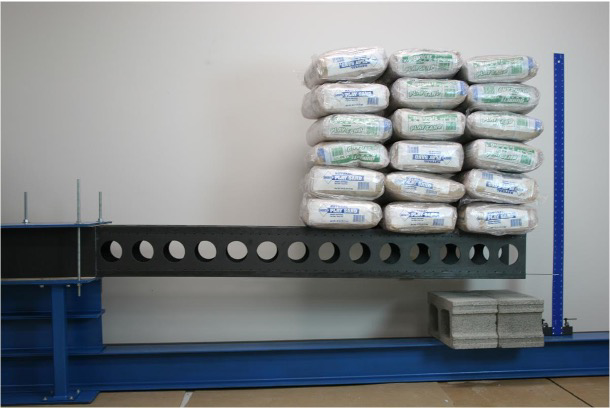
Carbon Fiber Material Properties
These properties are intrinsic to the carbon fiber laminate itself and apply whether the part is a sheet, a tube, or a structural shape. The figures describe a balanced 0/90° laminate at standard-modulus (33 Msi) fiber; later sections show how sheet and tube construction change the picture.
What Is the Tensile Modulus of Carbon Fiber?
Tensile modulus, also called stiffness or modulus of elasticity, is the ratio of stress to strain — it predicts how much a material deflects as a function of load in the area before failure. For a balanced, symmetrical 0/90° carbon fiber laminate, tensile modulus is approximately 70 GPa (10 Msi). That is roughly equal to aluminum (69 GPa) and about 35% of structural steel's 200 GPa — but at less than one-fifth the density of steel. Because stiffness scales with fiber grade and ply alignment, high-modulus and ultra-high-modulus grades raise this figure substantially, and unidirectional (0°) layups raise it further along the load axis.
Carbon Fiber Modulus Classes (Fiber Grade)
Carbon fibers — the raw filaments, before they are laid up into a laminate — are classified by their tensile modulus. These fiber-grade values are much higher than the finished laminate modulus above, because a laminate also contains resin and off-axis plies. DragonPlate products are offered across the following grades:
| Fiber modulus class | Fiber tensile modulus (GPa) | Fiber tensile modulus (Msi) | DragonPlate products at this grade |
| Low modulus | < 227 | < 33 | Entry-level / specialty layups |
| Standard modulus | 227 | 33 | Most sheet lines (EconomyPlate, Quasi-isotropic, Uni, Twill/Uni, Twill, ArtisanPlate, Two-Sided); roll-wrapped and pultruded tubes |
| Intermediate modulus | 289 | 42 | Select made-to-order layups |
| High modulus | 393 | 57 | High Modulus CF Sheets; high-modulus roll-wrapped tubes |
| Ultra-high modulus | 758 | 110 | High Modulus sheets (UHM, by request); ultra-high-modulus roll-wrapped tubes |
Ultra-high-modulus fiber is roughly three times stiffer than standard-modulus fiber, but it trades away some tensile strength to get there. Most DragonPlate products use standard-modulus (33 Msi) fiber; the High Modulus line uses 57 Msi fiber, with 110 Msi ultra-high modulus available by request.
What Is the Tensile Strength of Carbon Fiber?
Tensile strength is the maximum stress a material withstands before it fractures. A standard-modulus 0/90° carbon fiber laminate reaches approximately 600 MPa (87 ksi) — about 43% stronger than structural steel (420 MPa) and more than double the tensile strength of 6061-T6 aluminum (276 MPa).
One important caveat: carbon fiber does not yield before it fractures the way metals do. It is comparatively brittle and is susceptible to localized failures at stress concentrations such as holes, notches, and sharp cutouts. Factors of safety and joint design should account for this brittle failure mode rather than assuming the ductile, "bends-before-it-breaks" behavior of steel or aluminum.
How Does Carbon Fiber Density Compare to Steel and Aluminum?
A carbon fiber laminate has a density of approximately 1.5 g/cm³ — about 81% lighter than steel (7.9 g/cm³) and 44% lighter than aluminum (2.7 g/cm³). DragonPlate laminates range from roughly 1.4 to 1.6 g/cm³ depending on resin system and fiber volume; the approximate weight of every sheet SKU is published in the Specifications tab of its product listing. This low density is what turns carbon fiber's moderate absolute stiffness into class-leading performance once weight is taken into account.
What Is the Specific Strength of Carbon Fiber?
Specific strength (strength divided by density) and specific modulus (stiffness divided by density) are the fairest way to compare structural materials, because they reward materials that deliver performance without weight. On these measures carbon fiber is in a class of its own: its specific tensile strength is about 7.5× that of steel and roughly 4× that of aluminum, and its specific modulus is nearly double both. This is the real answer to "how strong is carbon fiber?" — pound for pound, nothing in common engineering use comes close.
Does Carbon Fiber Have Good Fatigue Resistance?
Mostly yes — but the honest answer depends on how the laminate is loaded, and it is not immune to fatigue.
Loaded along the fiber direction in tension, carbon/epoxy has excellent fatigue resistance. The carbon fibers are the laminate's main load-bearers, and on-axis (fiber-direction) tension-tension loading produces a very flat S-N curve — markedly less fatigue-sensitive than off-axis loading — so a fiber-dominated laminate holds a high fraction of its static strength over millions of cycles. Unlike aluminum — which has no distinct fatigue limit and will eventually fail even under low cyclic stresses — a well-designed, fiber-aligned carbon laminate retains most of its strength over very long lives, which is why it is trusted in cyclically loaded aerospace, motorsport, robotics, and automation structures.
The important qualification: carbon fiber composites fail differently from metals and do accumulate damage under cycling. Rather than growing a single dominant crack, a laminate accumulates distributed damage — matrix microcracking first, then cracking in off-axis (±45°, 90°) plies, then delamination between plies, and finally fiber breaks that build up at high stress levels until the part loses stiffness and fails. This damage accumulation is most pronounced in matrix-dominated load paths (off-axis and shear) and under compression or tension-compression cycling, where the S-N curve is noticeably steeper. The design takeaways: keep cyclic stresses well below static strength, align fibers with the principal load, and avoid relying on the resin matrix in fatigue-critical directions.
Is Carbon Fiber Corrosion-Resistant?
Carbon fiber is non-metallic and contains no elements that rust. Combined with an epoxy matrix, DragonPlate laminates are highly resistant to moisture, salt, fuels, and most industrial chemicals, which is why they are used in marine, defense, and outdoor enclosures. Two practical notes: the resin matrix — not the fiber — is what can degrade under prolonged UV or aggressive chemical exposure, so protect it where needed; and because carbon fiber is electrically conductive, galvanic corrosion can occur where it contacts aluminum or steel without an insulating barrier. Use a glass-fiber, phenolic, or PTFE isolation layer in fastened joints between carbon fiber and metal.
What Are the Thermal Properties of Carbon Fiber?
Two thermal properties matter most for design: dimensional stability and maximum service temperature.
Along the fiber axis, carbon fiber laminates have a very low coefficient of thermal expansion (CTE) — near zero and layup-dependent, far lower than aluminum (~23 µm/m·°C) or steel (~12 µm/m·°C). This near-zero expansion makes carbon fiber valuable in optical benches, metrology fixtures, and satellite structures where parts must hold dimension across temperature swings.
Maximum service temperature is set by the resin system, not the fiber:
| DragonPlate resin system | Forms | Max service temperature |
| Standard woven epoxy | EconomyPlate, Quasi-isotropic, Two-Sided, Carbon/Kevlar sheets | 140°F |
| Epoxy prepreg | Uni, Twill/Uni, Twill, ArtisanPlate sheets; roll-wrapped tubes | 250°F |
| Pultruded epoxy | Round and square pultruded tubes | 200°F |
| Wet-layup epoxy | Braided ±45 tubes | 140°F |
| High Temp carbon/phenolic | High Temp prepreg sheets | 500°F |
Is Carbon Fiber Flame-Retardant?
Flammability is a separate question from service temperature — a material can resist heat without being flame-retardant, and vice versa — so DragonPlate addresses the two needs with two different product families:
- For flammability / fire-spread requirements, the Flame Retardant carbon fiber line uses a flame-retardant epoxy resin that resists the spread of fire; the flame-retardant carbon fiber veneer is tested and certified to pass the FAR 25.853(a) Appendix F vertical burn specification (the aviation flammability standard). The same flame-retardant resin system is used across veneers, EconomyPlate sheets, twill prepreg sheets, and structural shapes (angle, C-channel, I-beam, hat stiffener, and braided round and rectangular tube), and flame-retardant prepreg versions can be made to meet both FAR 25.853 vertical burn and smoke/toxicity requirements — though structural components are not guaranteed to pass a specific burn test without verification (see below).
- For high-temperature service, the High Temp carbon/phenolic line stays rigid to 500°F, and its phenolic resin is inherently flame-retardant and survives brief direct flame contact.
Standard (non-FR) epoxy laminates are not inherently flame-retardant — carbon fiber itself combusts given enough oxygen and heat, and the resin contributes to combustion — so for any fire-critical application choose the flame-retardant epoxy line or the carbon/phenolic high-temp line. Because flame retardancy also depends on part geometry and how components are integrated into an assembly, DragonPlate notes that a standard flame-retardant component is not guaranteed to pass a specific burn test; customers should verify compliance for their application.
Carbon Fiber Sheets: Properties by Construction
Carbon fiber sheets and plates are laminated composites built from stacked plies of woven or unidirectional fiber in an epoxy matrix. Their in-plane properties depend on ply orientation: a balanced 0/90° woven layup — DragonPlate's most common sheet construction — gives roughly symmetric stiffness in the 0° and 90° directions, while unidirectional (0°) layups concentrate stiffness and strength along a single axis, and quasi-isotropic (0/90/±45) layups spread it more evenly for off-axis loads. Stepping up the fiber grade (see the modulus-class table above) raises stiffness further: the High Modulus sheet line is roughly 50% stiffer than aluminum at half the weight.
How Does a Carbon Fiber Sheet Compare to Steel and Aluminum?
The table below summarizes a balanced, symmetrical 0/90° woven carbon fiber sheet at standard-modulus (33 Msi) fiber against structural steel and 6061-T6 aluminum.
| Property | CF sheet (0/90 woven) | Steel (structural) | Aluminum 6061-T6 |
| Tensile modulus | ~70 GPa (10 Msi) | ~200 GPa (29 Msi) | ~69 GPa (10 Msi) |
| Tensile strength | ~600 MPa (87 ksi) | ~420 MPa (61 ksi) | ~276 MPa (40 ksi) |
| Density | ~1.5 g/cm³ | ~7.9 g/cm³ | ~2.7 g/cm³ |
| Specific tensile modulus | ~46.7 MN·m/kg | ~25.3 MN·m/kg | ~25.5 MN·m/kg |
| Specific tensile strength | ~400 kN·m/kg | ~53 kN·m/kg | ~102 kN·m/kg |
| Corrosion resistance | Excellent (non-metallic) | Poor (rusts) | Moderate (oxidizes) |
| Fatigue resistance | Superior in fiber direction | Good | Moderate |
CF sheet: DragonPlate standard-modulus 0/90° balanced layup. Steel: structural mild steel. Aluminum: 6061-T6. Specific properties are normalized by density. Fatigue performance is strongest along the fiber direction in tension; matrix-dominated and compression loading accumulate damage faster (see the fatigue section above).
DragonPlate offers ten solid carbon fiber sheet lines that differ by layup, construction, finish, and temperature rating — see the Solid Carbon Fiber Sheets & Plates buyer's guide to choose among them.
Carbon Fiber Tubes: Properties by Construction
Carbon fiber tubes are hollow sections, and a hollow section is geometrically efficient because it places material away from the neutral axis, where it does the most work in bending and torsion. That stiffness-to-weight efficiency makes carbon fiber tubes mainstays of UAV and drone airframes, robotic structures, and other weight-critical frames. DragonPlate makes tubes three ways, and the manufacturing method drives the properties:
- Roll-wrapped tubes are built from multiple wraps of twill and/or unidirectional prepreg around a mandrel. They are offered in standard, high, and ultra-high modulus fiber grades and can be laid up predominantly unidirectional, which together let them reach the highest bending stiffness per unit weight of any DragonPlate tube. Rated to 250°F, with typical uses in automation and robotics, telescoping poles, idler rollers, and UAV components.
- Braided tubes are made by a wet layup (not prepreg) of ±45° carbon fiber braid over axial unidirectional fabric, giving a characteristic wet, glossy braid finish. The ±45° braid makes them much stronger under torsional and side (crush) loading than pultruded tubes — and lighter — while the captured unidirectional layers prevent longitudinal cracking and splitting. They come in standard, axially optimized, high-modulus, and carbon/Kevlar hybrid variants, rated to 140°F, and are widely used for UAV and drone airframes, lightweight frames, trusses, and robotics.
- Pultruded tubes are made by pulling unidirectional (0°) fiber through a heated die in an epoxy matrix — not wrapped around a mandrel. The all-axial layup makes them exceptionally straight and rigid, ideal as economical building blocks for frames, trusses, and reinforcement. They use standard-modulus fiber, are rated to 200°F, and come in round and square sections.
Which construction is right depends on how the tube is loaded — the two sections below break the properties down by load direction.
Axial and Bending Stiffness of a Carbon Fiber Tube
Axial and bending stiffness are driven by fiber aligned with the tube's length (0° plies), the fiber grade, and the tube's cross-section. The baseline laminate figures from the material-properties section — about 70 GPa modulus and 600 MPa strength for a balanced 0/90° layup — are the floor; a unidirectional 0° layup concentrates fiber along the axis and pushes axial stiffness and strength well above it, and stepping up the fiber grade (standard 33 Msi → high 57 Msi → ultra-high 110 Msi roll-wrapped) raises it further. Geometry then multiplies the effect: because bending stiffness (EI) rises sharply with diameter and wall thickness, a hollow section is highly efficient. Pultruded tubes are fully unidirectional, which makes them very stiff and straight along the axis — but they are offered only in standard-modulus (33 Msi) fiber. Roll-wrapped tubes can also be laid up predominantly unidirectional and are additionally available in high- and ultra-high-modulus grades (57 and 110 Msi), so they reach the highest bending stiffness per unit weight in the lineup — the reason they are chosen for robotic arms, structural frames, and UAV spars where deflection is the limiting constraint. Compared with metal tubing of the same shape, a carbon fiber tube provides far more stiffness and strength per unit weight than drawn-over-mandrel (DOM) steel (~200 GPa, ~420 MPa) or 6061 aluminum (~69 GPa, ~276 MPa), at roughly one-fifth and one-half their density respectively.
Torsional and Side-Load Strength of a Carbon Fiber Tube
Torsional rigidity (GJ) and resistance to side/crush loading come from fibers oriented at ±45° to the tube axis — so torsional performance is fundamentally a question of how much ±45° fiber the wall carries, not of the manufacturing method itself. That distinction sorts the three constructions cleanly:
- Pultruded tubes are all-axial (0° only), so they have essentially no ±45° fiber and are the weakest of the three in torsion. This is firm — it's a consequence of the layup.
- Braided tubes are built around a ±45° braid as their primary architecture, so they are torsion- and side-load-optimized as sold. Beyond fiber angle, the continuous, interlaced braid and the captured unidirectional core resist the longitudinal splitting that all-axial tubes are prone to — a real, braid-specific advantage in side and crush loading. (DragonPlate rates braided tubes as much stronger in torsion and side loading than pultruded.)
- Roll-wrapped tubes carry woven 0/90 plies alongside their axial UD, which gives them more off-axis fiber — and more torsional capacity — than an all-axial pultruded tube. Standard catalog roll-wrapped tubes use a 0/90 + UD layup optimized for bending stiffness; for torsion-driven applications, a ±45° layup is available as a custom build, typically by orienting the outer or inner twill layers at ±45°. Torsional performance is therefore moderate as stocked and can be increased to order.
The practical takeaway: for twisting and off-axis loads, braided is the off-the-shelf ±45° choice and beats an all-axial pultruded tube outright; a standard roll-wrapped tube is bending-optimized, but a custom ±45° roll-wrapped layup is available when an application needs roll-wrapped's other attributes together with higher torsional strength.
How Does a Carbon Fiber Tube Compare to Steel and Aluminum?
| Property | CF tube (roll-wrapped) | CF tube (braided) | CF tube (pultruded) | Steel tube (DOM) | Aluminum tube 6061 |
| Construction | Prepreg wraps over mandrel | Wet layup, ±45° braid + axial UD | Pultruded through a die | — | — |
| Layup | Woven 0/90 + UD plies | ±45° braid + axial UD | All unidirectional (0°) | — | — |
| Axial tensile modulus | ≥ 70 GPa; higher with UD / high-modulus fiber | ≥ 70 GPa; raised by axial UD core | ≥ 70 GPa (all-axial) | ~200 GPa | ~69 GPa |
| Axial tensile strength | ≥ 600 MPa; higher with UD layup | ≥ 600 MPa; UD core adds axial strength | ≥ 600 MPa (all-axial) | ~420 MPa | ~276 MPa |
| Torsional / side-load strength | Moderate stock (0/90 + UD); ±45 custom available | Very high (±45° braid) | Low (all-axial) | High | Moderate |
| Density | ~1.5–1.6 g/cm³ | ~1.2–1.6 g/cm³ | ~1.5–1.6 g/cm³ | ~7.9 g/cm³ | ~2.7 g/cm³ |
| Fiber modulus grades | Standard / High / Ultra-High | Standard / High / Ultra-High | Standard | — | — |
| Max service temp | 250°F | 140°F | 200°F | High | Moderate (temper-limited) |
| Corrosion resistance | Excellent | Excellent | Excellent | Poor | Moderate |
| Fatigue resistance | Superior in fiber direction | Superior in fiber direction | Superior in fiber direction | Good | Moderate |
Notes:
- Data: CF columns are DragonPlate roll-wrapped, braided, and pultruded lines; steel = DOM mild steel tubing; aluminum = 6061 extruded.
- Axial properties shown — transverse and torsional values vary with layup.
- "≥ 70 GPa / ≥ 600 MPa" is the 0/90 laminate floor; unidirectional and higher-modulus layups exceed it.
- Braided density varies by variant — standard braided ~1.2 g/cm³ (lightest); axially-optimized ~1.6 g/cm³.
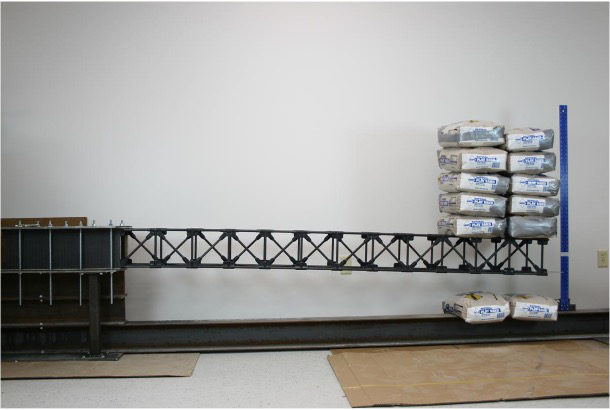
Carbon Fiber vs Steel vs Aluminum vs Fiberglass vs Kevlar®
Fiberglass and Kevlar® laminates have densities close to carbon fiber, but carbon fiber is both stronger and far stiffer than either. The table below compares a standard-modulus carbon fiber laminate against the common structural alternatives. Specific strength and specific modulus — the weight-normalized columns — are where the difference is clearest.
| Property | Carbon fiber laminate | Steel | Aluminum 6061-T6 | Fiberglass | Kevlar® (aramid) |
| Tensile modulus (GPa) | 70 | 200 | 69 | 25 | 30 |
| Tensile strength (MPa) | 600 | 420 | 276 | 440 | 480 |
| Density (g/cm³) | 1.5 | 7.9 | 2.7 | 1.9 | 1.4 |
| Specific tensile modulus (MN·m/kg) | 46.7 | 25.3 | 25.5 | 13.2 | 20.8 |
| Specific tensile strength (kN·m/kg) | 400 | 53 | 102 | 231 | 333 |
| Corrosion resistance | Excellent | Poor | Moderate | Good | Good |
| Electrical conductivity | Conductive (along fiber) | Conductive | Conductive | Non-conductive | Non-conductive |
Values are representative for a standard-modulus 0/90 carbon fiber laminate and common grades of each material. Specific properties are normalized by density.
Comparing materials is rarely a single-number exercise — there are several valid ways to measure strength, which is why absolute and specific values can tell different stories. When stiffness and strength per unit weight are what matter, carbon fiber is the clear choice. When flexibility, impact tolerance, or low cost outweigh stiffness, fiberglass or Kevlar® may be the better fit, and Kevlar® in particular is often hybridized with carbon fiber (as in DragonPlate's Carbon/Kevlar sheets) to add impact and abrasion resistance.
A note on fatigue across these materials: carbon fiber's fatigue advantage is clearest versus metals (it outperforms steel and aluminum, especially per unit weight) and in high-cycle, on-axis tension loading. Against the other composites, the comparison is loading-dependent — carbon fiber is brittle and fails more abruptly, while aramid (Kevlar®) is notably tough and flex-fatigue tolerant, and glass falls in between — so no single fatigue ranking holds across all three. See the fatigue section above for the detail.
How Strong Is Carbon Fiber Filament?
The numbers above describe finished laminates. The raw carbon fiber filament is far stronger in isolation: high-quality filaments reach tensile strengths from roughly 3,500 MPa to over 7,000 MPa — several times that of typical structural steel (around 400–500 MPa). A finished part never reaches the bare-filament number because real strength depends on the layup, fiber orientation, fiber volume fraction, and resin system. This gap between filament strength and laminate strength is exactly why ply orientation and construction — not just "carbon fiber" as a material — determine how strong a given sheet or tube actually is.

Frequently Asked Questions
Does carbon fiber break easily?
Carbon fiber has a high strength-to-weight ratio and excellent fatigue resistance, but it lacks the elastic, ductile behavior of metals. It can be brittle and is susceptible to localized failure at stress concentrations under high loads, so proper design and engineering are essential. It does not "bend before it breaks" the way steel does.
Can carbon fiber rust or corrode?
No. Carbon fiber is non-metallic and contains no elements that rust, making it highly corrosion-resistant. The resin matrix can degrade under prolonged UV or chemical exposure if unprotected, and galvanic corrosion can occur where carbon fiber contacts bare metal — isolate the joint with a non-conductive barrier.
Can you burn carbon fiber?
Yes. Carbon fiber combusts given sufficient oxygen and heat, and the resin contributes to combustion. Burn behavior depends on the fiber, resin, and process. For fire-critical applications, choose a flame-retardant system — DragonPlate's flame-retardant epoxy line (its veneer is certified to the FAR 25.853 vertical burn specification) for flammability and fire-spread resistance, or the carbon/phenolic High Temp line for high-temperature service.
Is carbon fiber stronger than steel?
On a weight-for-weight (specific) basis, dramatically so — roughly 7.5× the specific tensile strength of steel. In absolute terms, a standard 0/90 laminate is about 43% stronger than structural steel in tension while being far less stiff and roughly 81% lighter. The honest comparison depends on whether weight is part of your budget.