Frequently Asked Questions

Product Information: Carbon Fiber in Musical Instruments

How is carbon fiber used in musical instrument construction?

Carbon fiber is used in musical instruments for both reinforcement and full construction. Common applications include reinforcing necks of stringed instruments (such as guitars, mandolins, violins, cellos, and basses) with carbon fiber strips to increase bending and torsional stability, reduce weight, and add strength. Carbon fiber strips are also used in guitar bracing and soundboards, often combined with balsa or spruce, to create lightweight, resonant internal structures. In some cases, entire instrument bodies are constructed from carbon fiber, offering weather resistance and durability. Note: While carbon fiber offers many benefits, some musical purists may prefer traditional wood for tonal reasons. Source

What types of carbon fiber products does DragonPlate offer for musical instruments?

DragonPlate offers a range of carbon fiber products suitable for musical instruments, including carbon fiber strips for neck reinforcement, rods, plates, and pultruded components. These products can be used for localized reinforcement, internal bracing, soundboards, and even full instrument construction. Specialized products like carbon/Kevlar hybrid sheets and tubes are also available for enhanced toughness and impact resistance. Note: Selection should be based on the specific instrument and application requirements. Source

What are the benefits of using carbon fiber in musical instruments?

Benefits of using carbon fiber in musical instruments include high strength-to-weight ratio, increased durability, weather resistance, and reduced risk of warping or damage during travel. Carbon fiber reinforced necks provide greater bending and torsional stability, while carbon fiber soundboards and bracing allow for lighter, more resonant instruments. Full carbon fiber instruments can withstand extreme temperatures and humidity, making them suitable for outdoor performances and travel. Note: Some musicians may prefer the traditional sound and feel of wood instruments. Source

How does carbon fiber reinforcement affect the sound and playability of stringed instruments?

Carbon fiber reinforcement, such as strips in the neck or bracing in the body, can increase stability and reduce unwanted movement, which helps maintain consistent playability. Carbon fiber's low damping and high stiffness-to-weight ratio can contribute to a resonant, responsive instrument. Full carbon fiber instruments are often designed to mimic the shape and construction of wood instruments, resulting in a warm sound that can rival traditional models. Note: The tonal characteristics may differ from wood, and some musicians may notice subtle differences in resonance or feel. Source

What are some specific use cases for carbon fiber in musical instruments?

Specific use cases include reinforcing guitar, mandolin, violin, cello, and bass necks with carbon fiber strips; creating custom internal bracing for guitars using carbon fiber and balsa or spruce; fabricating soundboards for hollow-body stringed instruments with carbon fiber layers over wood, foam, or honeycomb cores; and constructing full carbon fiber instruments for enhanced durability and weather resistance. Carbon fiber is also used in passive amplifiers for music boxes and greeting cards to improve sound transmission and bass response. Note: Each application may require different product types and installation methods. Source

Features & Capabilities

What performance characteristics make DragonPlate carbon fiber suitable for musical instruments?

DragonPlate carbon fiber offers a high strength-to-weight ratio, low damping, and high stiffness, which are ideal for musical instrument applications. The material is engineered for durability and environmental resistance, making it suitable for instruments exposed to varying temperatures and humidity. DragonPlate also provides Kevlar and carbon/Kevlar hybrid products for enhanced impact resistance. Note: For applications requiring specific tonal qualities, testing and prototyping are recommended. Source

Can DragonPlate provide custom carbon fiber solutions for unique musical instrument designs?

Yes, DragonPlate offers custom fabrication services, including CNC cutting and tailored laminate schedules, to meet unique design requirements for musical instruments. Customers can request custom sheet sizes, specialized reinforcement shapes, and specific fiber orientations to optimize performance for their instrument. Note: Custom solutions may require additional lead time and consultation. Source

Are DragonPlate carbon fiber products certified for quality and consistency?

All DragonPlate products are manufactured under ISO 9001:2015 quality standards at their facility in Elbridge, New York. This certification ensures consistent quality and reliability for applications in musical instruments and other industries. Note: Certification does not guarantee suitability for every musical application; testing is recommended for critical projects. Source

Use Cases & Benefits

Who can benefit from using DragonPlate carbon fiber in musical instruments?

Instrument makers, luthiers, repair technicians, and musicians seeking increased durability, stability, and weather resistance can benefit from using DragonPlate carbon fiber products. These materials are suitable for both professional and hobbyist applications, including reinforcement, repair, and full instrument construction. Note: For traditionalists seeking specific wood tonal qualities, carbon fiber may not be the preferred choice. Source

Are there any notable examples of carbon fiber being used in the music industry?

Yes, DragonPlate has supported the creation of lightweight guitar designs using advanced carbon fiber components, demonstrating innovation in musical instrument design. These projects showcase the practical benefits of carbon fiber in achieving both durability and unique sound characteristics. Note: Detailed case studies are available for review. Watch demo

Technical Requirements & Implementation

How easy is it to implement DragonPlate carbon fiber products in musical instrument projects?

DragonPlate offers prefabricated carbon fiber strips, rods, and plates that can be cut, drilled, and bonded using standard epoxy adhesives, making them accessible for instrument makers and repair technicians. Technical documentation, CAD models, and guides are available to assist with integration. For custom solutions, DragonPlate provides design and CNC cutting services. Note: Some applications may require specialized knowledge or consultation for optimal results. CAD Models | Design Guide

What technical resources are available to support the use of carbon fiber in musical instruments?

DragonPlate provides downloadable CAD models, detailed weights and specifications, information on available finishes, and a comprehensive guide to carbon fiber design and application. These resources help instrument makers and designers integrate carbon fiber components effectively. Note: For advanced applications, consulting with DragonPlate's technical team is recommended. CAD Models | Weights & Specs | Design Guide

Pricing & Purchasing

How is pricing determined for DragonPlate carbon fiber products used in musical instruments?

Pricing for DragonPlate carbon fiber products varies based on product type, size, thickness, and additional features such as finishes. All prices are quoted in US Dollars. Shipping charges are calculated based on package weight and dimensions, and buyers are responsible for applicable taxes unless a valid exemption is provided. Note: Prices and discounts are subject to change without notice. Shipping & Returns

Support & Customer Service

What support is available for customers using DragonPlate carbon fiber in musical instruments?

DragonPlate provides dedicated customer support via phone and email for troubleshooting, technical questions, and product selection. Customers can also access technical documentation, guides, and account management tools online. For complex projects, DragonPlate's team can assist with design and fabrication inquiries. Note: Response times may vary based on inquiry complexity. Contact Support

Loading...

How Carbon Fiber is Used in Musical Instruments

Due to its strength, high stiffness to weight, and low damping, carbon fiber has become a sought-after material in various aspects of musical instrument construction, from basic instrument reinforcement to all-out instrument design.
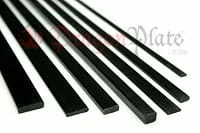
carbon fiber strips

Carbon Fiber Strips for Reinforcement

Carbon fiber strips make it easy to fabricate small, lightweight carbon fiber structures or to provide localized reinforcement because the flat surface provides an ideal surface area for epoxy bonding. This characteristic makes them an ideal choice for a variety of musical instrument applications.

Carbon fiber strips can give the necks of various stringed instruments much greater bending and torsional stability. They can add strength and stiffness to the neck and reduce its weight. In guitars, truss rods can also be combined with carbon fiber strips in various configurations to reinforce necks. The detailed dimensions of the instrument’s neck determine the best orientation for the carbon fiber strips. Along with guitars and mandolins, specialized carbon fiber neck reinforcements have been developed for violins, cellos, and basses, which stabilize the neck and headstock and can even be used as a reinforcement in neck repairs.

Guitar Bracing and Soundboards

Carbon fiber strips are used in conjunction with balsa or spruce as a stiffening laminate to create custom internal guitar bracing. In this case, the low damping, high strength, and high stiffness to weight of the carbon fiber strips provide a real advantage, allowing resonant, lightweight bracing. Further, carbon fiber strips in a lattice formation can make excellent top plate bracing that allows for greater thinning and increased response. Carbon fiber can be placed longitudinally as internal support for the top plate as well.

Soundboards for hollow-body stringed instruments can be fabricated using layers of carbon fiber on a core of wood, paper, foam, or honeycomb. Additional layers can be added to locally increase the stiffness of the soundboard. This process allows the resonance of the instrument to be optimized.

Music Box Passive Amplifiers

Passive amplification using a Helmholtz resonator is useful in a number of applications. For music boxes and singing greeting cards, a small carbon fiber stage has been developed which provides remarkable amplification, particularly in the lower frequency ranges, and adds a nice bass sound to these devices which typically lack lower registers due to their small size. In these situations, the carbon fiber structure transmits sounds exceptionally well.
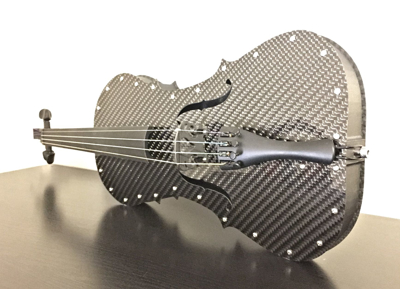
Carbon Fiber Musical Instruments

While musical purists may object to the idea of stringed instrument constructed of anything but the finest wood, more and more musicians are turning to carbon fiber instruments instead. There are a number of reasons why carbon fiber makes for a more practical concert instrument:

  • Weather tolerance: A carbon-fiber instrument can more readily withstand outdoor concerts performed in the heat and humidity of a Gulf Coast summer evening or the cold and damp of a January D.C. inauguration performance. Such weather circumstances strike dread in the hearts of musicians who invested thousands in wood instruments.
  • Durability: A musician who travels with their instrument knows the fear of being asked to check it with their baggage. Carbon fiber, with its trademark strength and stiffness, withstands the beating an instrument takes on the road far better than wood instruments.
  • Sound: Carbon fiber violins and cellos provide a surprisingly warm sound. They are generally designed in exactly the same way a wood instrument is—using the same shape, chin rests, fingerboards, bridges, sound posts, and so on, as wood designs. The box is simply made of carbon fiber instead of wood. By sticking with traditional construction methods and varying only the material of the instrument box itself, manufacturers are able to create musical instruments with a sound that rivals even the most expensive wood models.

Carbon fiber has long been known as a material well-suited for high-performance applications. Many professional sports personnel, from tennis players to golfers to cyclists, wouldn’t consider a material other than carbon fiber for their equipment these days. Now it is likewise becoming more common for musicians to choose carbon fiber for their instruments as well, whether they are constructing the entire instrument box from carbon fiber or simply creating a stronger instrument using carbon fiber strip reinforcement. As is the case for so many applications, carbon fiber’s characteristics of strength, durability, and low weight make it an ideal choice for musical instrument construction.

Buy Pultruded Strips, Rods and Tubes >>

Loading...