Frequently Asked Questions

Product Information & Manufacturing Process

How is carbon fiber made?

Carbon fiber is produced from an organic polymer precursor, most commonly polyacrylonitrile (PAN), which accounts for about 90% of production. The process involves several key steps: spinning the precursor into fibers, stabilizing them through heating in air (200-300°C for 30 minutes to two hours), carbonizing at 1,000-3,000°C in an inert atmosphere to expel non-carbon atoms, surface treatment (oxidation) to improve bonding, and sizing to protect the fibers during handling. The resulting carbon fibers are then wound onto bobbins and can be woven into fabrics or formed into composite materials. Note: The exact precursor composition and process details may vary by manufacturer and are often proprietary. Source.

What types of carbon fiber products does DragonPlate offer?

DragonPlate offers a wide range of carbon fiber products, including tubes (round, square, rectangular, hexagonal, tapered, airfoil, large diameter, telescoping), structural components (angles, I-beams, C-channels, D-tubes, hat stiffeners, modular tube connectors), panels and sheets (solid sheets, sandwich panels, laminates, veneers), specialty products (flame-retardant composites, high-temperature materials, Kevlar composites, adhesives, fasteners), and modular connector systems. Note: Not all product types may be suitable for every application; review technical specs or consult support for guidance. Product catalog.

What is the purpose of surface treatment and sizing in carbon fiber manufacturing?

Surface treatment (oxidation) is performed after carbonization to improve the chemical bonding properties of carbon fibers, allowing them to adhere better to epoxies and other composite materials. Sizing is the process of coating the fibers to protect them during handling and weaving; sizing materials are selected for compatibility with adhesives used in composite structures. Note: Improper surface treatment can introduce defects; expert supervision is required. Learn more.

Features & Capabilities

What are the key performance characteristics of DragonPlate carbon fiber products?

DragonPlate carbon fiber products are known for their high strength-to-weight ratio, durability, and resistance to corrosion and environmental factors. They are engineered to withstand harsh environments and are suitable for demanding applications in aerospace, robotics, and medical devices. Advanced engineering tools like Finite Element Analysis (FEA) are used to optimize designs and reduce material waste. Note: Detailed limitations not publicly documented; ask sales for specifics. More on FEA.

Does DragonPlate offer custom carbon fiber solutions?

Yes, DragonPlate provides custom design, engineering, and prototyping services through its Element6 Composites division. Custom fabrication includes CNC cutting, tailored laminate schedules, and specific ply orientations to meet unique project requirements. Note: Custom solutions may require additional lead time depending on project complexity. Explore customization.

What certifications and quality standards does DragonPlate meet?

DragonPlate's manufacturing facility is ISO 9001:2015 certified, ensuring high-quality manufacturing standards and consistent product reliability. This certification is important for customers in regulated industries such as aerospace and medical devices. Note: Certification does not guarantee suitability for all regulatory requirements; verify for your specific application. View certificate.

Use Cases & Industries

What industries use DragonPlate carbon fiber products?

DragonPlate products are used in aerospace/aviation, defense, industrial automation, medical devices, robotics, marine defense, drone technology, nuclear and industrial robotics, and the music industry. Case studies include collaborations with Frontier Electronic Systems (marine defense), Eureka Dynamics (drone technology), International Climbing Machines (robotics), and student aerospace organizations. Note: Not all products are suitable for every industry; consult technical documentation for fit. See case studies.

Who can benefit from using DragonPlate products?

Engineers, designers, product developers, and project managers in industries requiring lightweight, strong, and durable composite materials benefit from DragonPlate products. Typical applications include aircraft interiors, robotic frames, medical imaging devices, tactical gear, and musical instruments. Note: Best fit for teams needing high-performance composites; those with non-technical or low-strength requirements may want to consider alternatives. See applications.

Pain Points & Solutions

What common challenges do DragonPlate products help solve?

DragonPlate addresses high manufacturing costs, complex fabrication processes, localized stress concentrations, regulatory compliance, weight and performance optimization, prototyping and design validation, and material handling safety. Solutions include advanced FEA, end-to-end services, biocompatible materials, and CNC cutting. Note: Some challenges may require custom solutions; contact support for complex needs. Learn more.

How does DragonPlate help with regulatory compliance?

DragonPlate offers materials designed to meet stringent industry standards, including biocompatibility and radiolucency for medical applications. This helps customers in regulated industries navigate complex approval processes more efficiently. Note: Not all products are certified for every regulatory requirement; verify compliance for your specific use case. Medical applications.

Pricing & Ordering

How is DragonPlate pricing determined?

DragonPlate product prices are listed on the website in US Dollars and are subject to change without notice. Prices do not include shipping, taxes, or handling charges, which are calculated based on order details. Customization and additional services may incur extra charges. Payment is typically prepaid, with Net 30 terms available for approved buyers. Bulk discounts may be available for large orders. Note: Pricing does not include all possible fees; review terms before ordering. Terms & Conditions.

Technical Documentation & Support

What technical resources are available for DragonPlate products?

DragonPlate provides several technical resources, including the Ultimate Guide to Carbon Fiber Design and Application, downloadable CAD models, detailed technical specifications, and practical application guides. These resources help customers integrate products into their designs and understand performance characteristics. Note: Some resources may require registration or direct inquiry. Access the guide | CAD models | Technical specs.

How quickly can I implement DragonPlate products in my project?

DragonPlate offers prefabricated components that can be integrated immediately into projects without specialized equipment. For custom solutions, the timeline depends on project complexity and may require additional design and prototyping time. Technical guides and CAD models are available to accelerate integration. Note: Custom projects may extend lead times; contact support for estimates. Contact Element6.

How can I get support or contact DragonPlate?

Customers can reach DragonPlate support by phone at 315-252-2559 (Mon-Fri 8:30am – 5:00pm ET) or by email at service@dragonplate.com. Additional support resources, including FAQs and technical documentation, are available on the website. Note: Response times may vary during peak periods. Contact page.

Customer Success & Case Studies

Can you share examples of successful DragonPlate projects?

Yes, DragonPlate has supported projects such as composite electrical enclosures for marine defense (Frontier Electronic Systems), drone test bed systems (Eureka Dynamics), wall-climbing robots for nuclear and industrial use (International Climbing Machines), high-performance carbon fiber rockets (student aerospace organizations), and lightweight guitar designs for the music industry. Note: Results may vary by application; see linked case studies for details. Marine defense | Drone technology | Robotics | Aerospace | Music industry.

Loading...

How is Carbon Fiber Made?
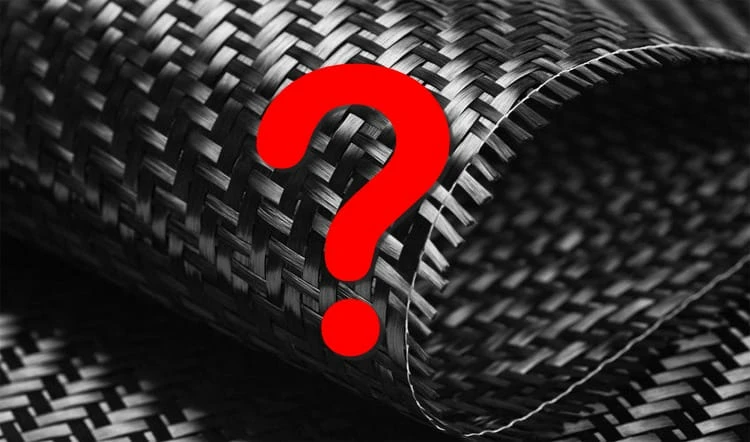
While the basis of carbon fiber—fibers made of carbon—sound simple enough, there are myriad ways to combine these relatively simple fibers, often with other products, to create the stronger, stiffer, and lighter materials highly favored by design engineers for modern high-tech projects.

Carbon Fiber Precursors

Carbon fiber always begins with an organic polymer, known as the precursor. About 90% of the time, that precursor is polyacrylonitrile (PAN). Sometimes rayon or petroleum pitch is used instead. Organic polymers consist of long strands of molecules bonded by carbon atoms. Precursor composition varies slightly by manufacturer, and the exact composition is usually a closely guarded trade secret.

During the manufacturing process, gases, liquids, and other materials might be added to create various properties in the carbon fibers. Sometimes a specific effect is sought; other times, a specific reaction or preventing a specific reaction is the goal. Again, the exact combination of process materials is usually a corporate secret.

Carbon Fiber Manufacturing Process

Once the right combination of process materials is achieved, the precursor is pulled into long strands or fibers, then heated at elevated temperatures in an inert atmosphere (pyrolysis) to achieve carbonization. Carbonization expels most of the non-carbon atoms, leaving long, tightly woven chains of carbon atoms with only a small amount of non-carbon material remaining. This process usually consists of five steps:

  1. Spinning—The precursor is mixed with other materials, and then spun into fibers. These fibers are then washed and stretched.
  2. Stabilizing—Carbon fibers must be chemically altered before carbonization to make them more thermally stable by changing their linear atomic bonds to ladder bonds. Fibers are heated in air to around 200-300°C for 30 minutes to two hours. This heating process forces the carbon atoms to pick up oxygen atoms from the air and rearrange the molecules into a more thermally stable bonding pattern. This exothermic process must be carefully controlled to prevent overheating of the fibers. There are a variety of processes used to stabilize carbon fibers.
  3. Carbonizing—After the fibers are thermally stable, they are heated to 1,000-3,000°C for several minutes without oxygen. The lack of oxygen keeps the fibers from burning up in such high heat. During this process, it is important to keep the gas pressure inside the furnace higher than the air pressure outside the furnace and to keep the fiber entry and exit points sealed to prevent oxygen from entering the furnace. At this high temperature, the fibers expel their non-carbon atoms, and the remaining carbon atoms form tightly bonded carbon crystals. These carbon crystals align parallel to the long axis of the carbon fiber.
  4. Surface Treatment—The carbonization process leaves the fibers with a smooth surface that doesn’t bond well with epoxies and other materials used in making composite products. The surface is therefore oxidized slightly. Oxidation gives the surface better chemical bonding properties while also etching the surface to allow chemicals to better adhere to it. The fibers are sometimes immersed in gases like carbon dioxide, air, or ozone or liquids such as nitric acid or sodium hypochlorite to oxidize them. Other times, oxidation is achieved through electrolysis by immersing the positively charged fibers in a bath of electrically conductive materials. Whatever the method used for surface treatment, it is vital that it is performed under careful, expert supervision to prevent the introduction of surface defects that could lead to material failure further down the road.
  5. Sizing—Once oxidation is achieved, the fibers are coated to prevent damage as they are wound onto bobbins or woven into fabrics. The coating process is known as sizing, and the sizing materials are selected carefully to be compatible with the adhesives used to form composite structures. Coating materials might include polyester, nylon, urethane, or epoxy.

Once carbon fibers are sized, they are wound onto bobbins and loaded into spinning machines to be twisted into yarns of various sizes. These yarns can then be woven into fabrics or formed into composites.

Carbon Fiber Components

Loading...